
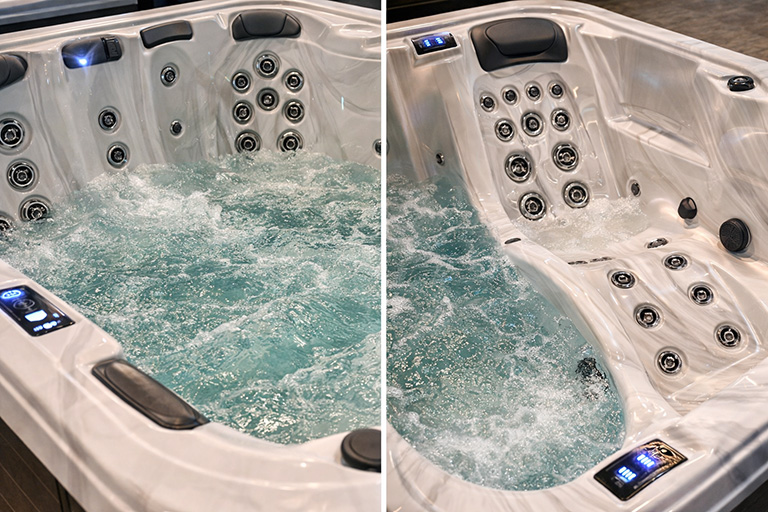
- Lounger seats (laid-back, reclined, full-body seating).
- Open seating (upright seats—more flexible, more social).
- “A lounger is the BEST thing I ever bought.”
- “A lounger is the seat I regret most.”
Quick Answer: What Most People Regret
People regret a lounger when…
- They float out of it (especially shorter or very buoyant people).
- The lounger takes up space, and they actually wanted more flexible seating.
- They mainly soak with family/friends, and the lounger becomes “that one seat nobody fights for.”
- They don’t love being reclined in water (some people prefer an upright position).
People regret open seating when…
- They wanted a “full-body massage seat” feel, and open seating doesn’t offer the same reclined jet path.
- They mostly soak solo and realize a lounger would’ve been their favorite “recovery chair.”
- They wanted to really stretch out and open seating feels like “just sitting.”
Here’s the simplest way to think about it:
People regret a lounger when…
- They float out of it (especially shorter or very buoyant people).
- The lounger takes up space, and they actually wanted more flexible seating.
- They mainly soak with family/friends, and the lounger becomes “that one seat nobody fights for.”
- They don’t love being reclined in water (some people prefer an upright position).
People regret open seating when…
- They wanted a “full-body massage seat” feel, and open seating doesn’t offer the same reclined jet path.
- They mostly soak solo and realize a lounger would’ve been their favorite “recovery chair.”
- They wanted to really stretch out and open seating feels like “just sitting.”
- Nack jets (upper + mid + lower back)
- Hip/glute jets
- Calf and foot jets
- A molded shape so you can stretch out.
Lounger vibe: best for
- Solo soakers
- Couples who want a “main seat.”
- Post-work relaxation and recovery.
- People who love to stretch out and be fully supported.
What Is Open Seating?
- Multiple seat depths.
- A variety of jet placements.
- More space for rotating seats.
- Easier conversation and socializing.
Open seating vibe: best for
- Families and friend groups
- People who like to rotate seats
- Homes with different heights/body types using the tub
- Anyone who wants flexibility over a “one-star seat”.
The Real Question: How Do You Actually Use a Hot Tub?
1) Are you primarily a solo soaker or a social soaker?
- Solo/quiet routine: lounger can be perfect.
- Friends/family often: open seating usually wins.
2) Do you like being reclined in water?
3) Are there multiple heights/body types using the tub?
4) Do you want one “best seat,” or do you like switching it up?
- One best seat: lounger
- Variety and rotation: open seating
Why People Love Loungers (When They Fit)
1) Full-body jet path
2) It’s mentally relaxing
3) Great for post-workout nights
4) Couples love the “main character seat.”
Why People Regret Loungers (The Honest Reasons)
1) Floating out of the lounger
Signs a lounger may be tricky for you:
- You’re shorter and tend to float easily.
- You feel like you’d need to “hold on” to stay in place.
- You don’t love reclined positions in water.
2) Lounger takes up “prime real estate”
- The lounger seat is always “occupied” by one person.
- Or it’s always empty because it doesn’t fit everyone.
3) Not everyone likes reclined soaking
4) Lounger can dominate how you use the tub
Why People Love Open Seating (Especially Long-Term)
1) Works for more body types
- Shorter users
- Taller users
- Broader shoulders/hips
- Anyone who floats more easily.
2) Better for entertaining
3) You can rotate seats like a mini spa circuit
4) More usable space
Why People Regret Open Seating
1) You wanted a full-body recline experience
2) You mostly soak alone
3) Not all open seating layouts are equal
- Different depths
- Different jet zones
- At least one “therapy” seat that hits major tension areas.
The “Wet Test” Is Everything (And Here’s How to Do It)
- Buoyancy
- How you sit in the mold.
- Whether you float.
- Whether jets hit the right zones.
If you can wet test, do this:
If you can’t wet test:
- Your height
- Your preferred soak posture.
- Whether you tend to float.
- Who will use the tub most often?
Who Should Choose a Lounger?
 You soak mostly alone or as a couple You love reclining and being fully supported You want a “recovery chair” vibe You’re okay with one seat being the “feature” seat The lounger fits your body well (no floating struggle)
- Solo soakers
- Couples who want relaxation + jets
- Fitness-focused owners who want a consistent post-work routine.
Who Should Choose Open Seating?
You soak with family/friends often Multiple heights/body types will use the tub You like sitting upright and rotating seats You want the most flexible layout You want fewer fit issues and fewer regrets- Families
- Hosts
- People who want variety without a “fussy” seat.
The Best of Both Worlds: “Lounge + Open” Hybrid Layouts
- One lounger (or a semi-lounge).
- Plus several open seats of different depths.
- Plus, a footwell designed for comfort.
- A “feature seat” for solo nights.
- open seating for guests.
- Flexibility for different body types.
The Sneaky Detail People Forget: Seat Depth Matters More Than Seat Count
- Multiple depth options.
- Ergonomic shaping that supports your back.
- Jets that hit real zones (not random spots).
- A footwell that doesn’t feel cramped.
"Which People Regret?” The Most Common Scenarios
Regret pattern #1: Buying a lounger without testing it
Regret pattern #2: Buying open seating when they wanted a “reclined escape”
Regret pattern #3: Buying a lounger in a tub that’s too small for entertaining
Regret pattern #4: Choosing based on looks, not comfort
A Simple Decision Checklist
Choose a lounger if:
- “I want to stretch out” is your #1 goal.
- You most often soak alone or as a couple.
- You want full-body jets.
- You’ve tested it, and it fits.
Choose open seating if:
- Flexibility and fit matter most.
- You soak with different people often.
- You like rotating seats.
- You want fewer surprises.
Choose hybrid if:
- You want both experiences.
- You’re not sure how often you’ll host.
- You want one “wow seat” without losing flexibility.
Love’s Hot Tubs Tip: How to Shop Without Regret
- Which seat fits my height best?
- Which seat hits the spots I actually want (upper back, hips, calves)?
- Do people tend to float in this lounger?
- Is there more than one seat depth option?
- If I host, where do people naturally sit and talk?
Final Thoughts
Lounger vs open seating isn’t about “better.” It’s about better for you.
- If you want a reclined, full-body, deep-exhale soak, a lounger can be perfect.
- If you want flexibility, fit, and social comfort, open seating usually wins.
- If you’re torn, hybrid layouts are often the safest and most loved option.
“Yep. This is the seat I’d pick every night.”
References
2. U.S. Consumer Product Safety Commission (CPSC) — CPSC Warns Of Hot Tub Temperatures
3. CPSC — CPSC Issues Warning for Pools, Spas, and Hot Tubs