

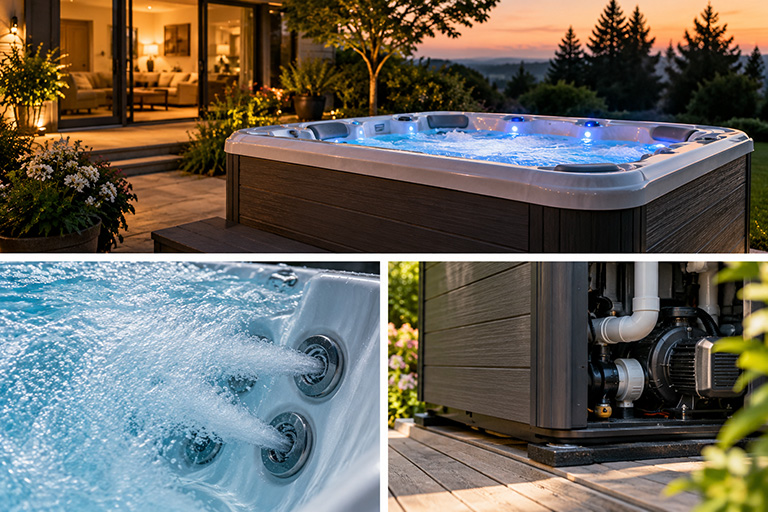
Some people like their peace and quiet, whether it’s having nice, quiet neighbors or having anything on their property, including a hot tub. Having a nice, peaceful place to live is many people’s top priority.
So, many of you may be wondering how loud a hot tub actually is. That can be debatable, because everyone’s perception of what is loud may vastly differ. Hot tub sounds vary from a mechanical baseline to the sound of rushing water and also electrical switches. Let’s get into the normal sounds a hot tub makes.
What Does a Hot Tub Normally Sound Like?
The components of hot tubs make distinct sounds from one another. The circulation pump produces a quiet, steady hum as it pushes water through the heater and filter. It’s one of the quieter operational functions your hot tub will produce. The filtration cycle sounds like a soft, continuous flow as water moves through the filter.
The heating cycle typically starts with a click, followed by a quiet flowing sound as water moves through the heater and filter. The above-listed features offer very low levels of noise compared to the jets, which create a heavy sound of rushing water, hissing, or bubbling from adjusting the jets. It’s significantly louder than the circulation pump, heating cycle, and water filtration. Unless, of course, you have something abnormally sounding coming from your hot tub, and you may need to call a professional hot tub technician.
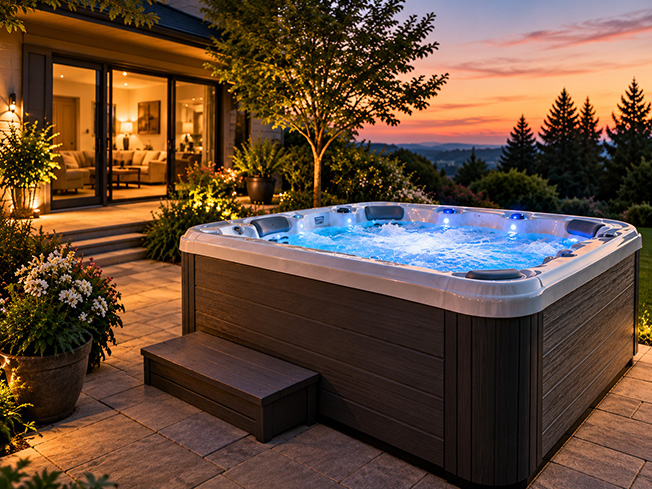
Unusual Hot Tub Noises: When Should You Be Concerned?
We’ve discussed what a normally operating hot tub may sound like; now let’s delve into what potentially abnormal sounds could sound like. If you hear the sound of rocks or gravel bouncing along inside the pump, it could be something called cavitation, which is caused by low water levels or a clogged filter starving the pump of water. This could be a relatively easy fix you could do on your own now, if you hear grinding noises or sharp metal-on-metal sounds. It could be a sign of failing motor bearings.
You could also hear a loud screeching due to dry bearings or faulty electrical windings. Some other noises you may hear that aren’t normal would be a humming without anything actually running. You’ll hear an electric-sounding buzz; this happens when the motor attempts to start but won’t spin. This could be from a bad start capacitor or a locked impeller. If you currently own a hot tub and these sounds are eerily familiar to you, we suggest giving a hot tub technician a call.
Where Should You Place a Hot Tub to Minimize Noise?
As was discussed earlier, keeping your home peaceful and quiet, as well as maintaining good relations with neighbors, is many people’s priority. Choosing a hot tub’s location is really just an extension of that, so choosing the right spot that won’t disturb your peace or annoy neighbors is paramount.
Placing a hot tub by a bedroom window may sound acceptable due to the white noise of bubbling water; however, it can disrupt your sleep due to the low-frequency sound of the heater and filtration cycle, which can easily penetrate your windows and walls. The heating cycle also often kicks on in the middle of the night. Some people prefer to place their hot tub 10–15 feet away from bedroom windows to help minimize noise disturbances. Another option is to place it near the living room, kitchen, or blank exterior walls.
Also try never to put a hot tub directly against an exterior wall or in a corner, because acoustic reflection amplifies the volume and makes it much louder. If possible, leave a buffer of two to three feet between the hot tub and wall. This also allows technicians to access the maintenance panel.
How Decks, Gazebos, and Enclosures Affect Hot Tub Noise
If you intend to install your hot tub on a deck or a gazebo, as many people do, it changes the way sound travels. Wood acts as an acoustic soundboard due to the pump’s vibration transferring into the wooden framing. It amplifies the low frequency hum throughout the entire structure and attached house. If you’re thinking of using a gazebo or sunroom, it may create an echo chamber sound that intensifies the sound for you and your guests.
There are a few things that may mitigate these amplified sounds. For example, never place a hot tub directly on wood without a vibration isolation pad. If you’re in an enclosure, aim for cedar or composite paneling, as they absorb sound better than concrete or glass. Also, proper ventilation is helpful to eliminate humid, noise-trapping air.

The surface beneath your hot tub, the surrounding materials, and the amount of open space can all influence how sound travels. Considering these factors before installation can help create a more comfortable soaking environment while reducing the possibility of unwanted noise.
How to Keep Hot Tub Noise From Disturbing Your Neighbors
We live in a modern world where property lines are often too close, and who really wants to annoy their neighbors with the constant buzz of a hot tub? There are a few things to consider when keeping your neighbors in mind, since neighboring fences rarely block the low-frequency sound of hot tub pumps.
First, you should check with HOA guidelines or city ordinances for minimum distance requirements from property lines and other contentious areas. Also, avoid placing your hot tub under a neighbor’s bedroom window for reasons discussed earlier. You may want to discuss your plans with them ahead of time to prevent future issues.
Beyond placement, the hot tub itself can make a difference in your overall experience. Pump operation, jet settings, and insulation can influence how much sound you hear while relaxing or when the hot tub is running its regular cycles. Comparing these features in person can help you find a model that fits both your comfort preferences and your outdoor space.
Hear the Difference at Love’s Hot Tubs
The best way to truly discover how loud a hot tub is might be to hear it and all its functions for yourself. Come into Love’s Hot Tubs and listen to one for yourself to see which one is right for you. Don’t forget to ask us about sound when comparing models.
Ready to find a hot tub that brings relaxation to your backyard without disrupting your peace and quiet? Visit Love’s Hot Tubs in Emmett, Idaho, to explore our selection of Nordic Hot Tubs and Artesian Spas. Our team can help you compare features, understand operating sounds, and find the right hot tub for your home and lifestyle.

Stop by Friday or Saturday from 10 AM to 5 PM, or schedule an appointment Monday through Thursday. We’d love to help you find your perfect place to relax!
References
1. Nordic Hot Tubs – Owner’s Manuals: Official manufacturer documentation covering hot tub operation, filtration systems, heating cycles, installation considerations, and maintenance requirements.
2. Nordic Hot Tubs – Installing a Hot Tub on Your Deck: Explains important considerations for installing a hot tub on a wooden deck, including structural support, local building requirements, positioning, and access for maintenance.
3. OSHA – Occupational Noise Exposure and Noise Control: Discusses how sound travels, reflects off surrounding surfaces, and can be reduced through sound-absorbing materials, barriers, and vibration isolation.
4. Acoustical Surfaces – How Sound Travels in a Room: Explains how sound interacts with different building materials, including reflection, absorption, and echoes. Relevant to hot tubs installed near walls, gazebos, or enclosed areas.
5. Acoustical Surfaces – How Vibrations Affect Structures and Humans: Covers how machinery vibrations transfer through building structures and how vibration isolation materials may help reduce noise.