

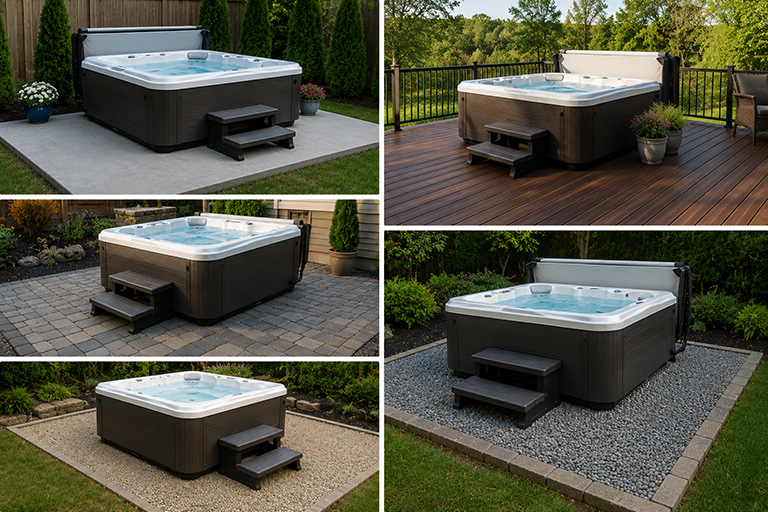
Choosing the right hot tub is exciting, but before your spa is delivered, there is one important question to answer: what should it sit on?
A hot tub needs a strong, level, and properly prepared foundation. The foundation must support the weight of the spa, the water, and the people using it. It should also protect the hot tub cabinet, shell, plumbing, and equipment over time.
There are several possible foundation options for a hot tub, including a concrete pad, reinforced deck, concrete pavers, compacted gravel, or a prefabricated spa pad. The best choice depends on your yard, spa size, drainage, installation needs, and budget.
At Love’s Hot Tubs, we want homeowners to feel confident before delivery day. Here is what to know when choosing the best foundation for your hot tub.
Why Your Hot Tub Foundation Matters
A filled hot tub is heavy. Once you add water and people, the total weight can reach thousands of pounds. That weight must be supported evenly across the base of the spa.
If the foundation is not strong, level, or stable, it can create problems over time.
An improper foundation may lead to:
- Uneven weight distribution
- Cabinet stress
- Shell damage
- Poor drainage
- Shifting or settling
- Service access issues
- Warranty concerns
A good hot tub foundation should be:
- Solid
- Level
- Stable
- Properly drained
- Built to support the full weight
- Easy to access for service
- Prepared before delivery day
The foundation is not simply about looks. It is about safety, support, drainage, and protecting your investment, with each factor affecting how well the spa performs over time.
Option 1: Concrete Pad
A concrete pad is one of the most common hot tub foundation choices. It provides a solid, permanent surface that can support the weight of a filled spa when installed correctly.
For many homeowners, a concrete pad is the simplest and most reliable option. It creates a clean, level surface and can be placed in a backyard, side yard, patio area, or outdoor living space.
A concrete pad may be a good choice if you want:
- A permanent hot tub location
- Strong ground-level support
- A clean, finished look
- A low-maintenance foundation
- Easier service access
- A solid option for larger hot tubs
Concrete is often the best all-around foundation because it is durable, stable, and straightforward when properly poured and reinforced.
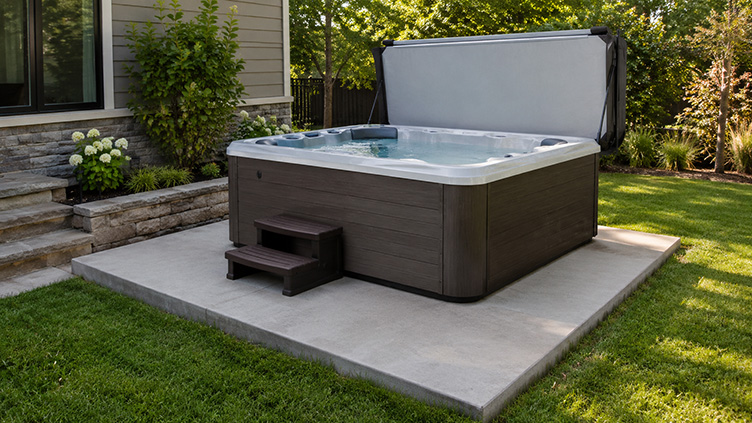
Pros of a Concrete Pad
A concrete pad is popular for a reason. It provides the hot tub with a strong base and works well with many backyard layouts.
1. It offers strong support.
Concrete can support heavy loads when it is installed correctly. This makes it a practical option for many hot tub sizes.
2. It creates a level surface.
Hot tubs need to sit flat. A level concrete pad helps the spa remain properly supported and reduces stress on the cabinet, frame, and shell.
3. It is long-lasting
A properly installed concrete pad can last for many years and usually requires less maintenance than wood surfaces.
4. It can make service easier.
When the spa sits on a ground-level pad, service panels are often easier to access than on a hot tub built tightly into a deck.
Things to Consider With a Concrete Pad
A concrete pad still needs to be planned correctly. It should not be poured without knowing the hot tub size, delivery path, drainage needs, and electrical location.
Before installing a concrete pad, think about:
- The size of the hot tub
- The full filled weight of the spa
- Drainage away from the house
- Access for delivery
- Electrical placement
- Room for steps
- Room for a cover lifter
- Service panel access
- Local building requirements
Drainage is especially important. Water should not collect under or around the hot tub. Rain, snowmelt, and overflow water need somewhere to go.
Option 2: Reinforced Deck
A deck can be a beautiful place for a hot tub. It can make the spa feel connected to the home and create a finished outdoor living space.
However, not every deck is built to hold a hot tub.
A standard deck may be strong enough for patio furniture, a grill, and people walking around, but it is not automatically strong enough for a filled hot tub. A hot tub should be placed only on a properly reinforced deck approved for the weight.
A reinforced deck may be a good choice if:
- You want the hot tub close to the house.
- You want a built-in outdoor living look.
- You already have a strong deck structure.
- You want easier entry and exit.
- You want the spa to connect with your patio or outdoor space.
- A contractor or structural engineer confirms the deck can support it.
If the hot tub will be placed on an elevated deck, talk with a qualified contractor or structural engineer first to confirm the deck can support the spa, water, and occupants.
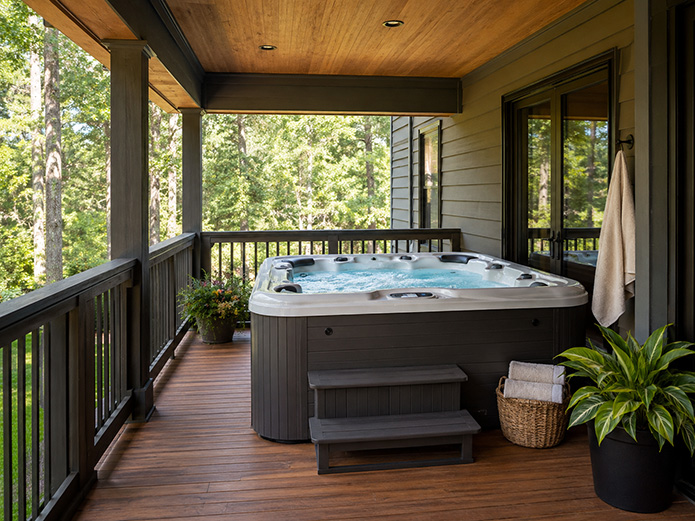
Pros of a Reinforced Deck
A reinforced deck can be a great foundation when it is designed correctly
1.It can look more custom.
A deck can help the hot tub feel built into the backyard design. It can include steps, seating, railings, lighting, or privacy screens.
2. It can improve access.
Some homeowners like placing a hot tub on or near a deck because it can make getting in and out easier.
3. It can keep the spa close to the home.
In colder months, having the hot tub near the door can make year-round use more comfortable.
4. It can create a better view.
A raised deck may give you a better view of the yard, trees, mountains, or open space.
Things to Consider With a Deck
A deck needs careful planning before a hot tub is placed on it. Not every deck is built to support a filled hot tub, so the structure must be confirmed first. The first question should be whether the deck can safely support the spa when filled.
Before using a deck as a hot tub foundation, ask:
- Was the deck built to support a filled hot tub?
- Has a contractor or structural engineer inspected it?
- Does it meet local building codes?
- Can it support the spa, water, and occupants?
- Is there enough room for service access?
- Can the equipment panel be reached?
- Will the deck allow proper drainage?
- Can the structure be inspected over time?
Service access is one of the biggest deck-planning mistakes. If a hot tub is built too tightly into a deck, it may be hard to access the equipment panel, drain, or electrical area later, so the deck layout should account for that.
That can turn simple service work into a much bigger project.
Option 3: Concrete Pavers
Concrete pavers can also be used as a hot tub foundation when they are installed correctly. Pavers can create a finished patio look and may be a good option for homeowners who want something more decorative than a plain concrete slab.
However, pavers require a properly prepared base. They should not be placed directly on dirt or uneven ground.
Concrete pavers may be a good choice if you want:
- A decorative patio-style look
- A ground-level foundation
- A customizable shape or layout
- Good drainage when installed correctly
- A less permanent look than poured concrete
The key with pavers is preparation. The base must be compacted, level, and stable enough to prevent shifting or settling, with drainage also kept in mind.
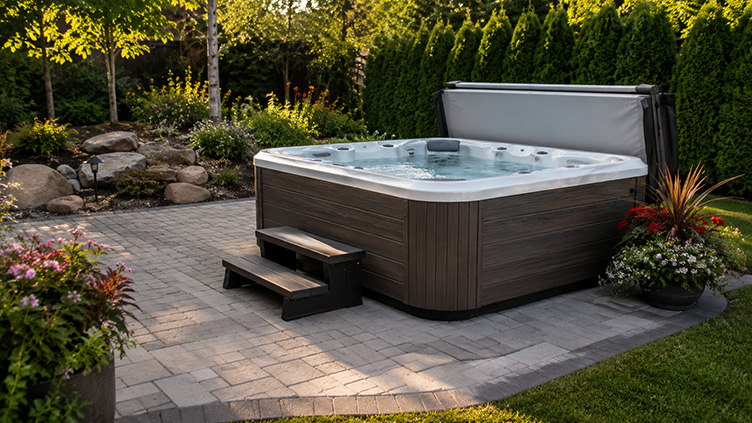
Pros of Concrete Pavers
Pavers can be equally functional and attractive.
1. They look finished.
Pavers can blend nicely with patios, walkways, landscaping, and backyard seating areas.
2. They allow design flexibility.
You can choose different colors, patterns, shapes, and layouts.
3. They may help with drainage.
When installed correctly over a proper base, pavers can allow water to move through or around the surface more easily than a solid slab.
4. Things to Consider With Pavers
Pavers can shift if the base underneath is not prepared correctly. This can create uneven support for the hot tub.
Before choosing pavers, consider:
- The thickness and strength of the pavers
- The compacted base underneath
- Drainage
- Leveling
- Edge restraints
- Soil conditions
- Long-term settling
- Manufacturer requirements
Pavers can work well, but they need professional-level preparation. A hot tub should never sit on loose, uneven, or shifting pavers.
Option 4: Compacted Gravel or Crushed Stone
Compacted gravel or crushed stone can be another foundation option for some hot tubs. This type of base can provide good drainage and may be more cost-effective than a poured concrete pad.
A gravel base is usually built by removing grass, roots, and loose soil, then preparing a compacted layer of crushed stone inside a framed area. The goal is to create a stable, level, well-draining surface that can support the spa evenly, with drainage and compaction as priorities
Compacted gravel or crushed stone may be a good choice if you want:
- Good drainage
- A more natural look
- A ground-level foundation
- A potentially more affordable option
- A base that can be prepared without pouring concrete
This can be especially helpful in areas where water drainage matters. However, it still needs to be installed correctly.
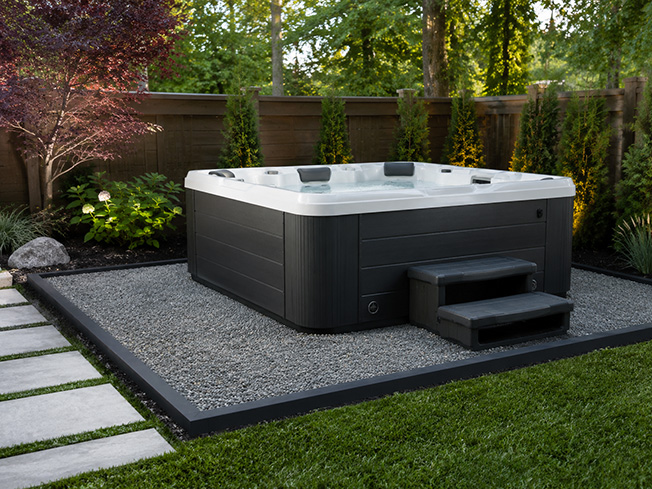
Pros of Compacted Gravel or Crushed Stone
Gravel and crushed stone can work well when the base is properly prepared.
1. It drains well.
A crushed stone base allows water to drain away from the spa rather than pool around it.
2. It can be budget-friendly.
Compared to a concrete pad, gravel may cost less depending on the size, location, and amount of site preparation needed.
3. It can work with natural landscaping.
A gravel base can blend into certain backyard designs, especially around cabins, garden areas, or rustic outdoor spaces.
Things to Consider With Gravel
Not all gravel is the same. Loose pea gravel or soft, shifting material may not provide the same support as compacted crushed stone.
Before choosing gravel, think about:
- The type of stone
- The depth of the base
- Compaction
- Drainage
- Border or frame support
- Soil conditions
- Leveling
- Manufacturer requirements
The base must be compacted and stable. If the gravel shifts or settles, the hot tub may become uneven.
Option 5: Prefabricated Spa Pads
Prefabricated spa pads are another option for some hot tub installations. These are usually modular pad systems designed to create a stable surface for a spa without pouring concrete.
Spa pads may be made from heavy-duty synthetic materials and installed over a prepared, level base. They can be useful for homeowners who want an alternative to concrete, but they still require proper ground preparation.
A prefabricated spa pad may be a good choice if:
- You want an alternative to poured concrete.
- You need a faster installation option.
- Your hot tub model allows it.
- The ground underneath can be properly prepared.
- You want a removable or modular foundation option.
Spa pads are not a shortcut around proper support. The surface underneath still needs to be level, compacted, and able to support the hot tub.
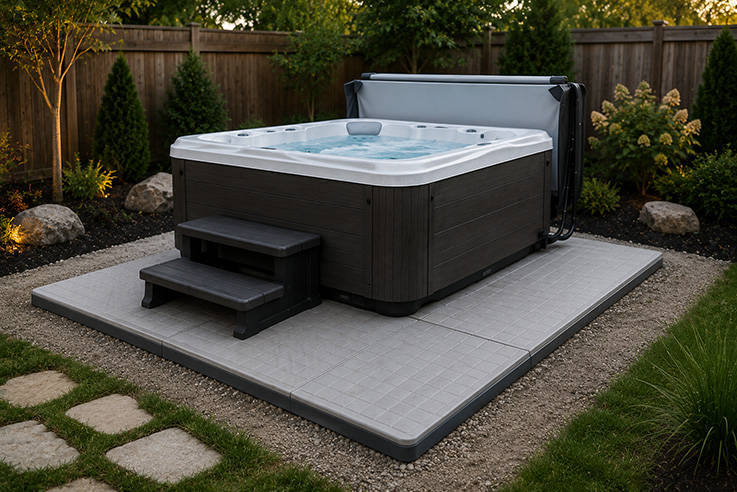
Pros of Prefabricated Spa Pads
Spa pads can be convenient in the right situation.
1. It drains well.
A crushed stone base allows water to drain away from the spa rather than pool around it.
2. It can be budget-friendly.
Compared to a concrete pad, gravel may cost less depending on the size, location, and amount of site preparation needed.
3. It can work with natural landscaping.
A gravel base can blend into certain backyard designs, especially around cabins, garden areas, or rustic outdoor spaces.
Things to Consider With Spa Pads
Before choosing a spa pad, make sure it is approved for your specific hot tub and installation.
Ask:
- Is this pad rated for the hot tub’s filled weight?
- Does the spa manufacturer allow this type of foundation?
- What ground preparation is required?
- Will it stay level over time?
- Does it allow proper drainage?
- Will it affect warranty coverage?
When in doubt, check the owner’s manual and talk with your dealer before choosing this option.
Foundations to Avoid
Some surfaces may look convenient but are not suitable for a hot tub.
Avoid placing a hot tub directly on:
- Bare dirt
- Grass
- Mulch
- Sand alone
- Uneven stones
- Loose pea gravel
- An old deck that has not been inspected
- A patio that is cracked, sloped, or settling
- Any surface that cannot support the full weight
A hot tub needs even support across the base. Soft, uneven, or shifting surfaces can lead to problems over time.

Concrete Pad vs. Deck vs. Other Foundations
So, which foundation is best?
For most homeowners, a concrete pad is the best all-around choice because it is strong, stable, level, and straightforward when installed correctly.
A reinforced deck can also be a great option when it is properly engineered, inspected, and built to code.
Concrete pavers can work well when installed over a compacted, stable base.
Compacted gravel or crushed stone can be a good option for drainage and cost-effective installations when properly framed, compacted, and leveled.
Prefabricated spa pads may work for some installations, but they need proper ground preparation and should be approved for your hot tub model.
Here is a simple breakdown:
Best overall option
Concrete pad
Best custom backyard look
Reinforced deck or concrete pavers
Best for drainage
Compacted gravel or crushed stone
Best alternative to poured concrete
Prefabricated spa pad
Best for raised installations
Engineered reinforced deck
The right choice depends on your space, hot tub size, budget, and long-term plans.
Before your hot tub is delivered, answer these questions:
- How much will the filled hot tub weigh?
- Is the foundation level?
- Can the surface support the full weight?
- Will water drain away from the spa?
- Is there enough room for service access?
- Is there space for steps and a cover lifter?
- Has the electrical setup been planned?
- Is the delivery path clear?
- Does the foundation meet the requirements in the owner’s manual?
- Do local building codes apply?
Planning ahead can make delivery day much easier.
Don’t Forget About Location
The foundation matters, but location matters too.
When choosing where to place your hot tub, think about:
- Privacy
- Wind exposure
- Shade
- Sun exposure
- Distance from the house
- Nighttime lighting
- Drainage
- Electrical access
- Delivery path
- Steps or walkways
- Winter use
In Idaho, many homeowners enjoy using their hot tub year-round. Placing the spa close to a door can make winter use easier. A sheltered location may also help reduce wind exposure and make the space feel more comfortable.
Final Answer: What Is the Best Foundation for a Hot Tub?
For most homeowners, the best foundation for a hot tub is a properly installed concrete pad. It is strong, stable, level, and long-lasting.
However, it is not the only option.
A reinforced deck, concrete pavers, compacted gravel, crushed stone, or a prefabricated spa pad may also work when the foundation is properly prepared and approved for the spa.
The most important rule is simple: your hot tub needs a solid, level, stable surface that can support the full weight of the spa and its occupants when filled.
Before installation, always review your owner’s manual, check local requirements, and talk with your hot tub dealer or a qualified contractor.
Visit Love’s Hot Tubs Before You Install
If you are planning for a new hot tub, Love’s Hot Tubs can help you understand what to consider before delivery day. Our team can help you compare spa sizes, review placement ideas, and talk through the basics of foundation so you feel prepared.
Whether you are planning a concrete pad, a reinforced deck, a paver patio, a compacted gravel base, or a backyard retreat, we can help you get started.
Visit Love’s Hot Tubs in Emmett to explore hot tubs and learn more about preparing your space for installation.
Love’s Hot Tubs
2370 Mill Rd, Emmett, ID 83617
(208) 353-2170
Serving Boise, Meridian, Nampa, Caldwell, Eagle, Emmett, and surrounding areas.
References
- Artesian Spas: 2025 Island Spas Owner’s Manual
- Artesian Spas: Owner’s Manuals
- Nordic Hot Tubs: 2024 Owner’s Manual
- Nordic Hot Tubs: Download Owner’s Manuals
- Nordic Hot Tubs: Installing a Hot Tub on Your Deck
- Better Homes & Gardens: Helpful Spa Installation and Hot Tub Installation Tips