

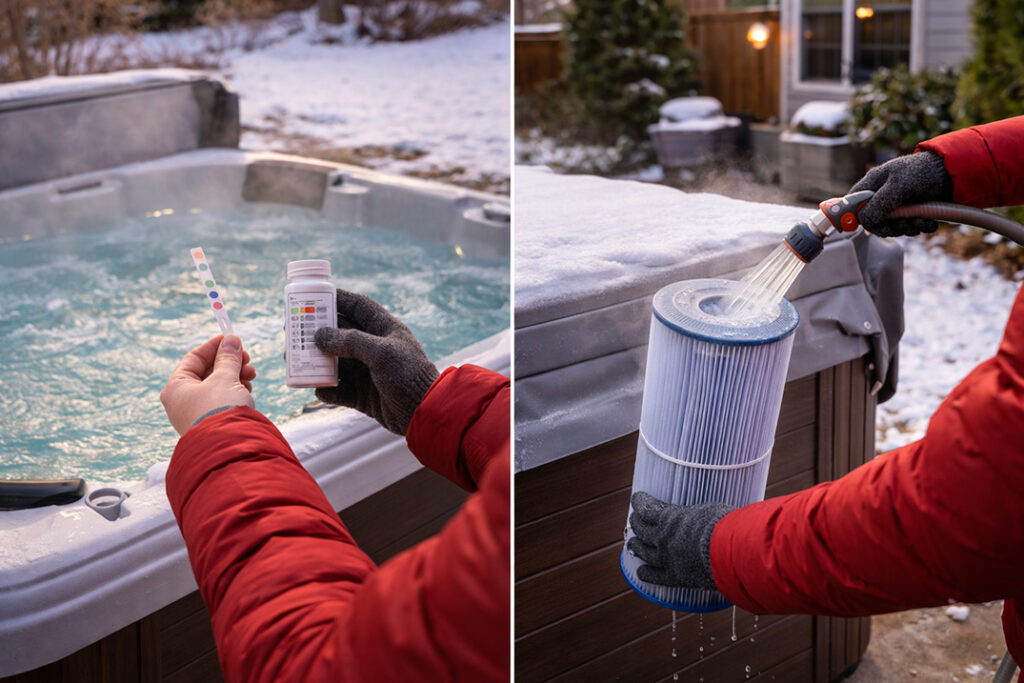
1) Keep Your Water Chemistry Steady (Winter Makes Small Issues Add Up)
- Test your water regularly (at least 2–3x per week in heavy-use weeks)
- Maintain consistent sanitizer levels to keep the water safe and clear.
- Balance pH and alkalinity to prevent irritation, cloudy water, and scaling
- Shock as needed (especially after gatherings or heavy use)
If your water suddenly looks off in winter, don’t assume it’s the cold—it’s usually sanitizer + pH drifting after increased use.
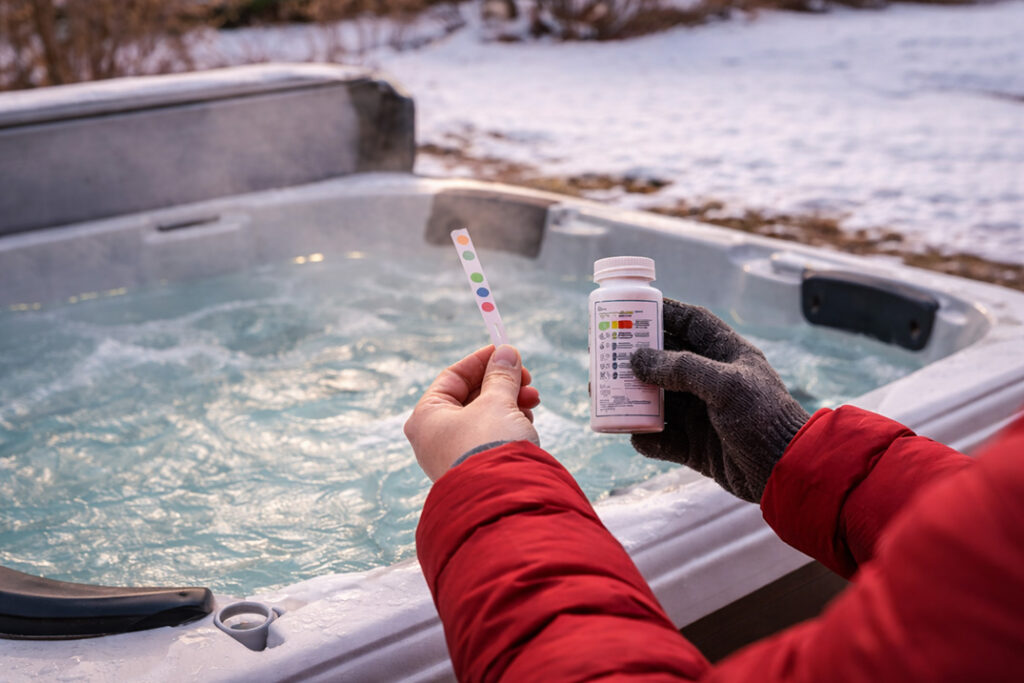
2) Don’t Turn the Temperature Down Too Far
- Reheating from a low temperature in freezing conditions can take a long time and use more energy than you’d expect.
- If there’s a power issue or a cold snap, water that’s already cooler is at greater risk.
- Keep your hot tub in a stable range you’ll actually use.
- If you’re leaving town, lower it moderately—not drastically—unless you’re following your manufacturer’s vacation settings.
3) Cover Care Is Winter Care (This Is Where Heat Loss Happens)
- Sealing properly around the edges
- Free of tears or waterlogging (a heavy, waterlogged cover = poor insulation)
- Latched/secured to prevent heat loss and wind problems
- Clear heavy snow buildup (don’t let it sit for days)
- Wipe the underside occasionally to reduce moisture and odor.
- Use a cover lifter if you have one to prevent damage and make it easier to close it quickly (less heat escapes)
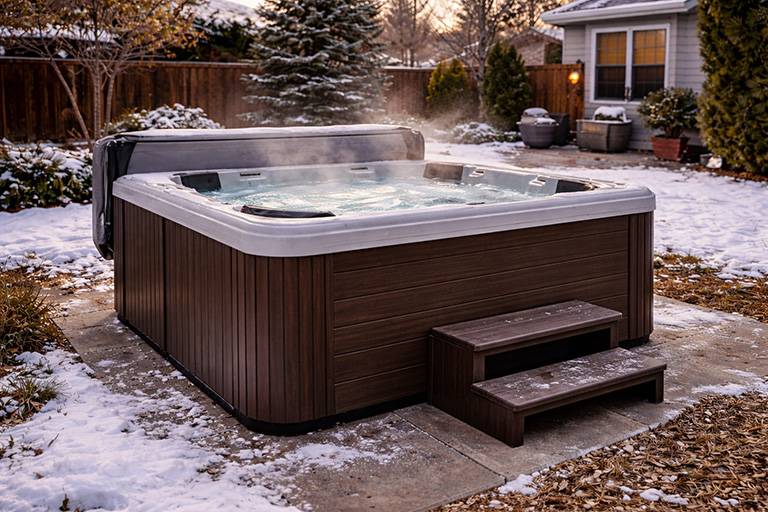
4) Watch the Water Level More Than Usual
- Reduced circulation
- Heater issues
- Air is getting into the system.
After a big soak session or a windy week, do a quick visual check. This one habit prevents many avoidable service calls.
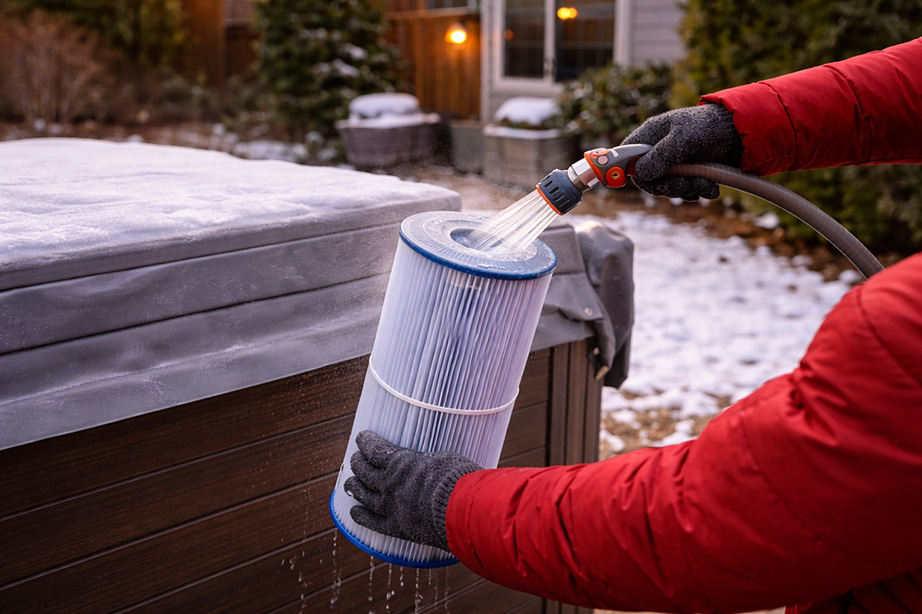
5) Rinse Filters Regularly (And Clean Them More Often in Winter)
- Rinse weekly or every other week (depending on use)
- Deep clean monthly (or as recommended for your filter type)
- Keep a spare set so you can swap and clean without downtime.
6) Reduce Foam and Cloudiness With One Simple Rule
- Avoid heavy lotions or oils.
- Quick rinse if you can (especially after workouts)
- Keep detergents/softeners off swimsuits if possible (or have spa-only suits)
7) Freeze Protection: What Actually Matters
- Power outages
- Low water level
- Dirty/clogged filters are reducing circulation.
- Leaving the cover open too long in freezing temps
- Keep the cover closed to hold heat as long as possible.
- Avoid draining unless you know exactly what you’re doing (draining can create more freeze risk if lines hold water)
- If the outage is prolonged, contact a professional for guidance.
8) Energy-Saving Tips That Don’t Ruin the Experience
- Make sure your cover seals tightly.
- Use your tub consistently at a stable temp, avoiding big drops and reheats.
- Keep filters clean (better flow = more efficient heating)
- Limit how long the cover stays open.
- Ask about insulation upgrades or cover options if your spa is older.
9) When to Drain and Refill During Winter
- Water is hard to balance, even when you’re testing/adjusting properly.
- Persistent cloudiness or odor
- Foam returns quickly
- You’ve had heavy use for weeks, and the water feels “tired.”
Stay Cozy All Winter—Without the Trial and Error
Winter makes hot tubs work harder, but most issues stem from flow, filtration, cover seal, or water balance. Love’s Hot Tubs can help you get dialed in with winter water care advice and the supplies you need to keep things simple and steady all season long.
FAQ: Winter Hot Tub Questions We Hear All the Time
Is it safe to use a hot tub when it’s freezing outside?
Yes—just be smart about transitions. Use nearby towels/robes, wear non-slip footwear, and limit time spent in cold air after you get out.
Should I keep my hot tub running all winter?
In Idaho winters, keeping it running is usually the easiest, safest option—especially if you plan to use it at all. Winterizing is a different process and best done intentionally (not as a quick decision during a cold snap).
Why is my water often more cloudy in winter?
Most commonly: higher use, insufficient sanitizer, and filters needing attention. Start with a test, then check the filter condition.
Not different chemicals; however, you may need to test and adjust more frequently due to increased use and evaporation.
References and Additional Reading
CDC – What You Can Do to Stay Healthy in Hot Tubs (updated May 20, 2025) CDC
Use for: recommended sanitizer ranges + pH guidance + safe hot tub temp info.CDC – Home Pool and Hot Tub Water Treatment and Testing (May 10, 2024) CDC
Use for: baseline hot tub chlorine guidance + why water testing matters.CDC – Operating and Managing Public Pools, Hot Tubs and Splash Pads (Jan 10, 2025) CDC
Use for: pH range + disinfectant minimums (helpful for “cloudy water/sanitizer crash” sections).CDC – Minimize Legionella Risk from Hot Tub Displays (Mar 18, 2024) CDC
Use for: why disinfectant + pH must be maintained even when not used frequently.CDC – Controlling Legionella in Hot Tubs (Toolkit Module) (Jan 3, 2025) CDC
Use for: risk explanation + operational guidance tied to hot tub water chemistry.Pool & Hot Tub Alliance (PHTA) – Maintaining Your Hot Tub PHTA
Use for: consumer-friendly maintenance basics (filters/cover/ongoing care).U.S. Consumer Product Safety Commission (CPSC) – Pool and Spa Drain Covers (Entrapment standard/requirements) U.S. Consumer Product Safety Commission
Use for: safety note about suction/entrapment + compliant drain cover standards.PoolSafely.gov / CPSC – Unblockable Drain Final Interpretive Rule (summary PDF) Pool Safely
Use for: higher-level background on anti-entrapment requirements (public pools/spas).Artesian Spas – Owner’s Manual (Freeze protection/circulation needed for heating) Artesian Spas
Use for: “freeze protection mode” concepts + “pump must circulate water through heater” basics.Artesian Spas – 2025 Island Spas Owner’s Manual (Smart Winter Mode/freeze protection behavior) Artesian Spas Use for: freeze-protection behavior description (pump cycles, indicators, etc.).