

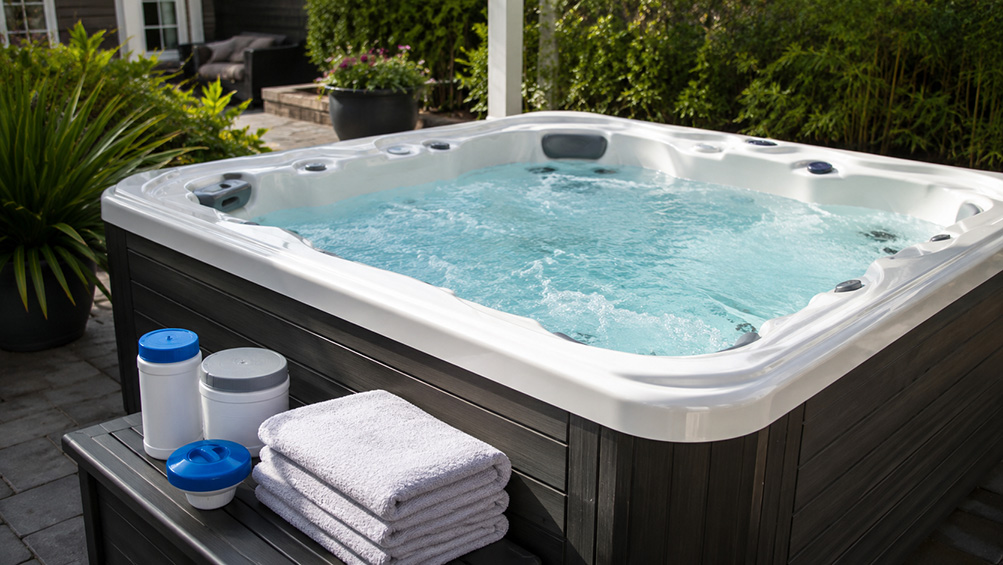
Clean, clear hot tub water does not happen by accident. It comes from the right balance of water testing, circulation, filtration, and sanitizer.
For many hot tub owners, water care can feel confusing at first. There are several terms that come up often, including ozone, minerals, chlorine, pH, alkalinity, shock, and sanitizer. Once you understand what each one does, hot tub maintenance becomes much easier.
Ozone, minerals, and chlorine all help keep hot tub water clean, but each does a different job.
In simple terms:
- Chlorine helps sanitize the water.
- Ozone helps oxidize certain contaminants.
- Minerals can support water care when used as directed.
- Filtration helps remove particles from the water.
- Water testing helps you know what your spa needs.
At Love’s Hot Tubs, we want hot tub ownership to feel relaxing, not overwhelming. With those basics in mind, understanding the details below can help protect your spa, improve your soaking experience, and keep your water looking its best, whether you are a new spa owner or have enjoyed a hot tub for years.
Why Hot Tub Water Care Matters
Hot tubs are different from swimming pools. They hold less water, operate at warmer temperatures, and are used in ways that allow body oils, lotions, sweat, and other contaminants to enter the water.
Because hot tub water is warm and constantly circulating, it needs regular care to stay clean, clear, and comfortable.
The Centers for Disease Control and Prevention explains that germs can spread through hot tub water and may cause skin, respiratory, or stomach illnesses when contaminated water is swallowed, touched, or breathed in as mist. That is why proper disinfectant levels and pH are important.
Regular water care helps:
- Keep the water clean and clear.
- Support a more comfortable soaking experience.
- Help the sanitizer work properly.
- Protect spa components.
- Reduce cloudy water, odors, and buildup.
- Make hot tub ownership easier over time.
It is important to remember that clear water does not always mean balanced water. That is why testing matters: a hot tub can look clean but still have low sanitizer, high pH, or water that needs attention.
Testing helps you understand what is happening in the water rather than guessing.
What Chlorine Does in a Hot Tub
Chlorine is one of the most common hot tub sanitizers. Its main job is to kill germs and maintain measurable protection in the water.
When used correctly, chlorine helps sanitize the water between uses. This is especially important because hot tubs are warm, compact environments where contaminants can build up quickly.
According to the CDC, hot tubs should have a chlorine concentration of at least 3 parts per million (ppm), and the pH should generally be kept between 7.0 and 7.8.
Chlorine works best when the water is balanced. If the pH is too high, chlorine may not work as well. If the pH is too low, the water can become uncomfortable or harder on spa components.
That is why hot tub owners should pay attention to more than just chlorine. They also need to check the other parts of the water care routine listed below.
A good water care routine usually includes checking:
- Chlorine or sanitizer level
- pH
- Total alkalinity
- Water clarity
- Filter condition
Many people think a strong chemical smell means there is too much chlorine. In some cases, strong odors can be a sign that the water is out of balance or needs attention, which is why testing is the best way to know for sure.
The best way to know is to test the water.
What Ozone Does in a Hot Tub
Ozone is a supplemental water care system found in many modern hot tubs. It creates ozone plus introduces it into the spa water through the circulation system.
Ozone is an oxidizer. That means it helps break down certain contaminants in the water.
However, ozone does not usually replace chlorine or another approved sanitizer. The Pool & Hot Tub Alliance explains that ozone systems are commonly used as secondary or supplemental treatment systems. Ozone also leaves little to no residual in the water, so it does not continue to protect the water the same way a measurable sanitizer level does.
A simple way to think of it is this:
- Ozone helps with the workload.
- Chlorine supports maintaining sanitizer protection in the water.
- Testing tells you whether the water is balanced.
For many hot tub owners, ozone can be helpful because it supports water care. Used with the rest of the routine, it may help reduce the amount of organic material the sanitizer must handle and support clearer water when the spa is properly maintained.
But ozone is not a “set it and forget it” system.
Even with ozone, hot tub owners still need to:
- Test the water regularly.
- Maintain sanitizer levels.
- Clean the filter.
- Keep the water balanced.
- Drain and refill the spa as needed.
- Follow the spa manufacturer’s care instructions.
Ozone can be a helpful part of water care, but it works best as part of the complete routine described above.
What Minerals Do in Hot Tub Water Care
Mineral systems are another option used in some hot tub water care routines. They may use elements such as silver or copper to support water quality.
Minerals can be helpful, but they should not be misunderstood. In most cases, minerals are not meant to completely replace sanitizer.
The Pool & Hot Tub Alliance explains that mineral sanitizers do not oxidize organic contaminants and must be used with an oxidizing treatment, such as chlorine, bromine, or another approved oxidizer.
In simple terms, minerals can support water care, but they are not the entire water care routine. They work best alongside the other steps in the system.
Minerals may help:
- Support water quality.
- Work alongside the sanitizer.
- Be part of a lower-chlorine routine when used as directed.
- Make water care feel easier for some owners.
However, hot tub owners still need to test their water and maintain the sanitizer level recommended for their specific system.
If your hot tub uses a mineral cartridge or mineral system, always follow the product directions and your spa manufacturer’s recommendations.
Ozone, Minerals, and Chlorine: How They Work Together
Ozone, minerals, and chlorine can work together, but each has a different job.
Here is the easiest way to understand the difference:
- Chlorine sanitizes the water and provides a measurable level of sanitizer.
- Ozone helps oxidize certain contaminants as water moves through the system.
- Minerals can support water quality when used correctly.
- Filtration helps remove particles from the water.
- pH balance helps sanitizer work properly.
- Regular testing helps prevent problems before they become bigger issues.
When these pieces work together, hot tub care gets much easier. Each part supports the next, so the water is more likely to stay clear, and the sanitizer can work more effectively.
The water is more likely to stay clear. The sanitizer can work more effectively. The spa may feel better to use. You may also spend less time guessing what the water needs.
Problems often happen when one part of the routine is ignored.
For example:
- Ozone does not mean you can skip sanitizer.
- Minerals do not mean you can stop testing.
- Chlorine is less effective when the pH is too high.
- Clear water can still be unbalanced.
- A dirty filter can make water care harder.
Hot tub water care works best when everything is kept simple and consistent. That is why the tips below can help you stay on track.
Basic Hot Tub Water Care Tips
1. Test the Water Regularly
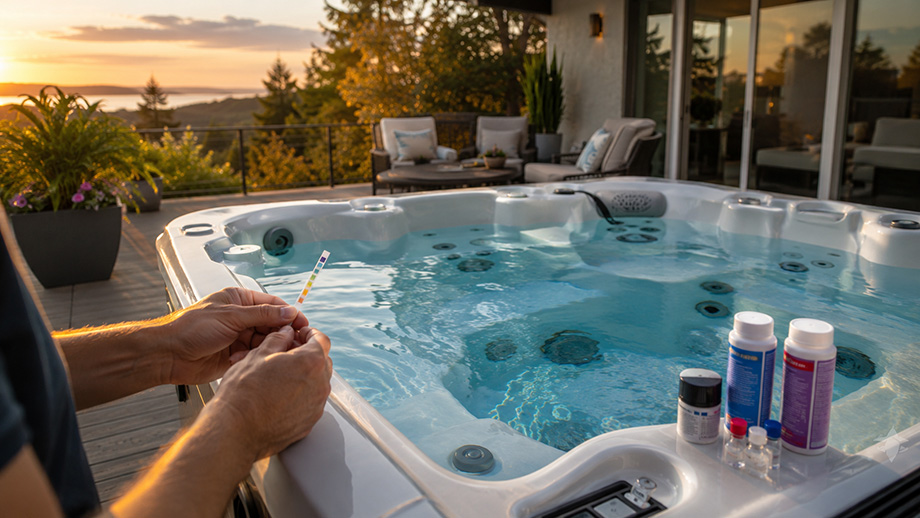
Testing is one of the most important parts of hot tub care. It helps you check sanitizer, pH, and alkalinity before small issues become bigger problems, so the rest of your routine stays on track.
The CDC recommends checking disinfectant and pH levels in hot tubs, especially because hot tub use, jets, dirt, sweat, and other contaminants can reduce sanitizer levels.
2. Keep the Filter Clean
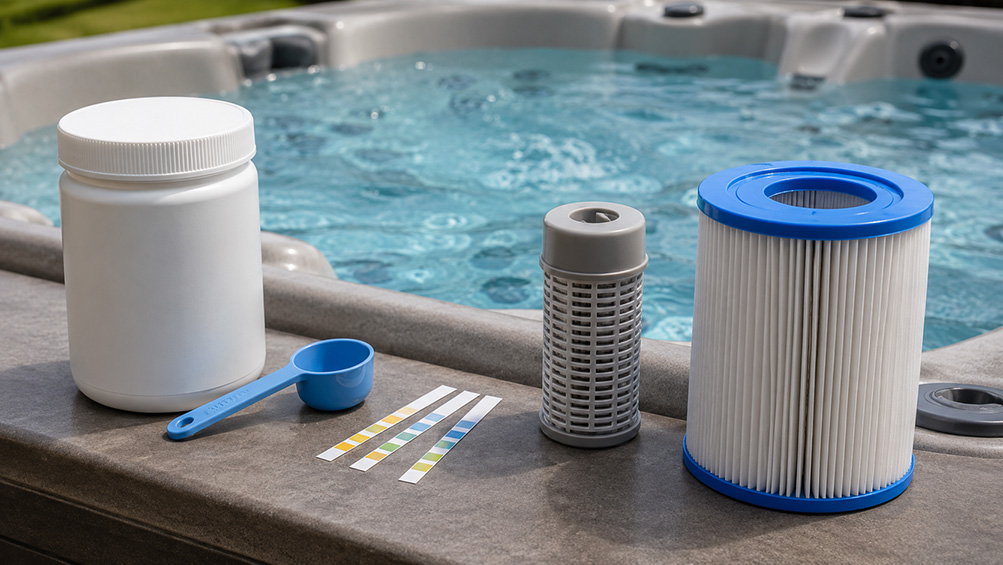
Your hot tub filter helps remove particles from the water. Keep it clean so the spa can circulate water properly and the rest of the system can work as intended.
A dirty filter can lead to:
- Cloudy water
- Poor circulation
- More strain on the spa system
- Water that is harder to balance
Rinse filters as recommended and replace them as needed to keep the rest of your water care routine working more effectively.
3. Shower Before Soaking
A quick rinse before getting into the hot tub can make a big difference.
Lotions, deodorant, makeup, sweat, sunscreen, and body oils can all affect hot tub water. Showering first helps reduce the amount of contaminants entering the spa.
4. Keep the Cover On When Not in Use
A quality hot tub cover helps keep debris out of the water. It also helps maintain the spa’s temperature and protects it when it is not in use, which supports the rest of your water care efforts.
Keeping the cover on can help reduce:
- Leaves and dirt
- Evaporation
- Heat loss
- Extra water care issues
5. Watch for Changes in the Water
Your water may give you clues when something is off.
Pay attention to:
- Cloudiness
- Foam
- Strong odors
- Slippery surfaces
- Water that feels uncomfortable
- Difficulty keeping sanitizer levels steady
If something seems off, test the water before adding more products so you can address the actual issue.
6. Drain and Refill as Needed
Even with good care, hot tub water does not last forever. Over time, dissolved solids build up, and the water can become harder to balance.
How often you drain and refill depends on your spa, how often you use it, and your water care routine. Use your owner’s manual or local hot tub dealer to decide what is best for your spa and keep the routine consistent.
Common Hot Tub Water Care Mistakes
Even with the right products, hot tub water can become cloudy or unbalanced if the routine is not consistent.
Here are a few common mistakes to avoid.
1. Assuming Clear Water Is Always Clean Water
Clear water can still have low sanitizer or unbalanced pH. Testing is the only way to know what the water needs, and that is why it should come before any adjustment.
2. Adding Chemicals Without Testing First
Adding products without testing can make water harder to balance. It may also create new problems, so test first and then adjust.
Always test first, then adjust.
3. Forgetting About the Filter
The filter is one of the hardest-working parts of the spa. If it is dirty, the rest of the water care system must work harder, so keeping it clean supports everything else.
4. Thinking Ozone or Minerals Replace Chlorine
Ozone plus minerals can support water care, but most systems still need an approved sanitizer. Chlorine or another sanitizer helps provide a measurable level of protection in the water.
5. Waiting Too Long to Drain and Refill
When hot tub water gets old, it can become harder to manage. If your water is difficult to balance even after testing and adjusting, it may be time for a drain and refill.
Make Hot Tub Ownership Easier
Hot tub water care does not have to feel overwhelming. Once you understand the role of ozone, minerals, and chlorine, the routine starts to make more sense.
Chlorine helps sanitize. Ozone helps oxidize. Minerals can support the water care process. Filtration helps remove particles. Testing and water balance bring everything together.
The goal is not to make hot tub care complicated. The goal is to make it consistent.
If you are not sure which water care system your hot tub uses, or you want help building an easier maintenance routine, Love’s Hot Tubs can help. Our team can walk you through the basics, explain your options, and help you choose products that fit your spa and your lifestyle.
Visit Love’s Hot Tubs in Emmett to learn more about hot tub water care, maintenance, and finding the right spa for your home.
Love’s Hot Tubs
2370 Mill Rd, Emmett, ID 83617
(208) 353-2170
Serving Boise, Meridian, Nampa, Caldwell, Eagle, Emmett, and surrounding areas.
References
- Centers for Disease Control and Prevention: Home Pool and Hot Tub Water Treatment and Testing
- Centers for Disease Control and Prevention: What You Can Do to Stay Healthy in Hot Tubs
- Centers for Disease Control and Prevention: Operating and Managing Public Pools, Hot Tubs, and Splash Pads
- Pool & Hot Tub Alliance: Secondary vs. Supplemental Disinfection Systems
- Pool & Hot Tub Alliance: Copper-Silver Mineral Sanitizers