

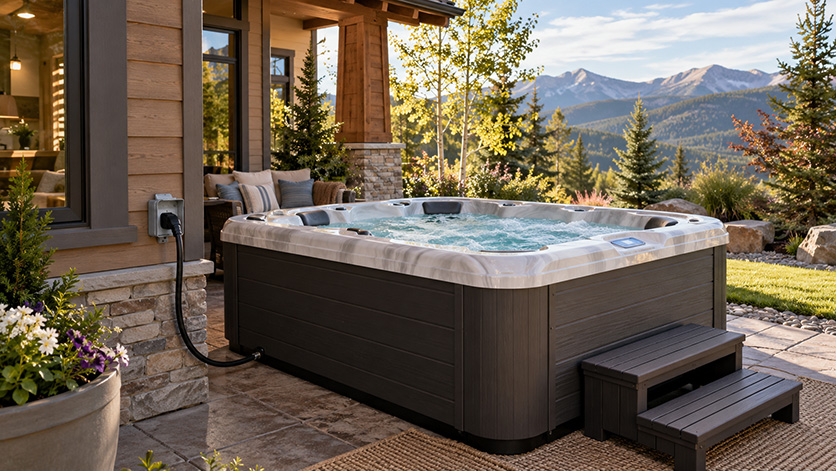
I’m sure you’ve heard of plug-and-play hot tubs and traditional hard-wired hot tubs. You may be asking yourself what the difference is, or which one is right for me and my budget. The differences are simple and also more subtle.
First, a plug-and-play hot tub is 110V and requires a properly rated, GFCI-protected electrical outlet. Simply put, you plug it in, and that’s it; you just need time to heat properly. Its counterpart, the 220V option, is hardwired into your electrical box, usually on a 40-, 50-, or 60-amp dedicated line. This requires an electrician and added startup costs. Let’s delve into which one is right for you.
Heating Times: 110V vs. 220V Hot Tubs
A noticeable difference between Plug-and-Play and 220V hardwired hot tubs is the amount of time it takes to heat up to temperature. A Plug-and-Play heats up much slower than its counterpart, heating about 1°F per hour and often taking 24+ hours to reach temperature. This can also be affected by the initial water temperature and the ambient temperature outside the hot tub.
Hardwired 220V hot tubs heat up much faster, heating at a rate of 2 to 4 degrees Fahrenheit per hour. Not only do they heat up more efficiently at first, but they also return to the target temperature faster.
Can Hot Tub Jets and Heaters Run at the Same Time?
One subtle, yet important, difference between 110V plug-and-play and hardwired 220V hot tubs is simultaneous operation. Simultaneous operation is the hot tub’s ability to run multiple functions, mainly the jets and heater, at the same time.
With most plug-and-play hot tubs, you can’t run the high-speed jets and the heater at the same time. When you activate the high-speed jets, the heater pauses, which can cause a temperature drop during longer soaks. However, the heater can typically operate while the pump runs at low speed.
The 220V is far more capable in simultaneous operation and superior if using all the features at once is the right choice for you. A 220V hot tub can run many pumps and high-powered jets simultaneously. It easily retains a steady temperature for longer soaks, which is perfect for Idaho’s sub-freezing winter nights.
Comparing Artesian Spas: 110V and 220V Pump Systems
At Love’s Hot Tubs, we offer both Artesian and Nordic Spas; they both offer different pump features. The 110V plug-and-play Artesian Spas offer single-speed or dual-speed pumps designed to operate within their electrical requirements.
Whereas the 220V luxury models offer different pump configurations, including higher horsepower pumps, ranging between 3HP to 6HP from Power Wow or Platinum Series Pumps. The luxury models also come equipped with a separate circulation pump that effortlessly handles heating and filtration around the clock.
Nordic Spas: Plug-and-Play vs. 220V Performance
With the Nordic Spa line, the 110V plug-and-play models offer different pump configurations depending on the model, including 1.0HP to 1.5HP 2-speed pumps that handle low-speed filtration and heating, along with high-speed hydrotherapy.
Some convertible models offer 2.0HP pumps. The 220V models also offer different pump configurations, including a 2.0HP continuous-duty 2-speed pump. (Or up to 3.0HP on select sporty packages.) These upgraded pumps are specifically designed to power Nordic’s signature Dual Therapy System (DTS) whirlpool effects rather than utilizing a separate, much smaller circulation pump.
Choosing the Right Hot Tub Features for Your Lifestyle
While pump horsepower, heating capabilities, and electrical requirements are important, the best hot tub isn’t necessarily the one with the most features. It’s the one that fits how you plan to use it.
Think about how often you’ll use your hot tub, whether you enjoy longer soaks during the winter, and how important powerful hydrotherapy jets are to your experience. Considering these factors alongside your budget can help you determine which electrical setup makes the most sense for your home.
Which Hot Tub Is Best for Your Idaho Home and Budget?
If you are a homeowner who’s planning on staying at your residence for a while, a 220V might be the best for you because of its ability to stay warm in the cold Idaho winters, and it’s superior for long-term use at a permanent residence.
The Plug-and-Play might be best for renters who may need to move it periodically and want a softer introduction to hot tub ownership. It has a lower upfront cost and doesn’t require a third-party electrician to hardwire it.
How Much Does It Cost to Install a 220V Hot Tub?
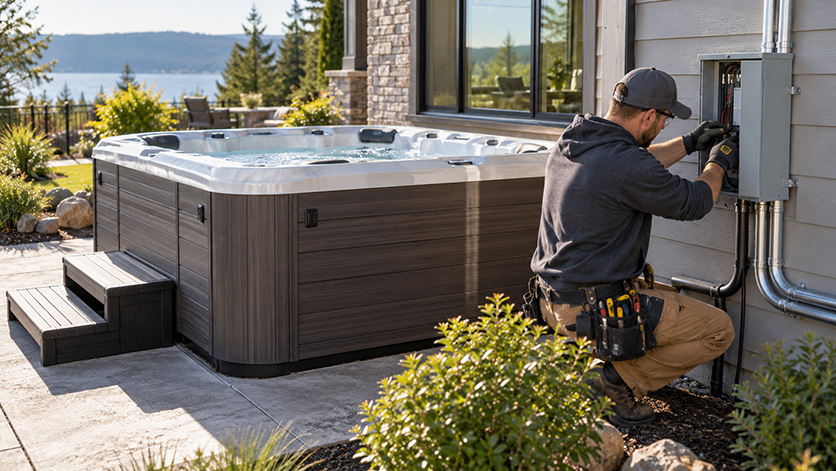
If you choose a traditional 220V hardwired setup, the cost to professionally wire a hot tub typically ranges from $500 to $2500 and can increase to $4700 according to Right Now Heating Cool.
If you have room in your electrical box and plan a short run with no trenching required, it’ll be on the lower end of the cost range. If the job is complex, requires an electrical panel upgrade, or requires heavy underground trenching through dirt or concrete, the cost could significantly increase.
Find the Right Hot Tub at Love’s Hot Tubs in Emmett, Idaho
If you are still unsure what’s best for you or your budget, feel free to stop by Love’s Hot Tubs or give us a call.
At Love’s Hot Tubs, we’re here to help you find the right spa without stretching your budget. With over 25 years of experience, we can walk you through the differences between our Artesian and Nordic Spas, explain what to expect with each electrical setup, and help you compare models in person.
We offer below-retail, all-inclusive pricing that includes a cover, cover lifter, steps, chemical kit, and free Treasure Valley delivery and backyard setup. Electrical work is not included. Visit our Emmett showroom Friday or Saturday from 10 AM to 5 PM, or schedule an appointment Monday through Thursday. Let us help you find the hot tub that fits your home, lifestyle, and budget.