
When shopping for a hot tub, most people naturally look at the seats first. Are there loungers? How many people can it hold? Where are the jets? Is there enough room to stretch out? Those are all important questions, but there is another part of the spa that can have a surprisingly big impact on comfort: the footwell.
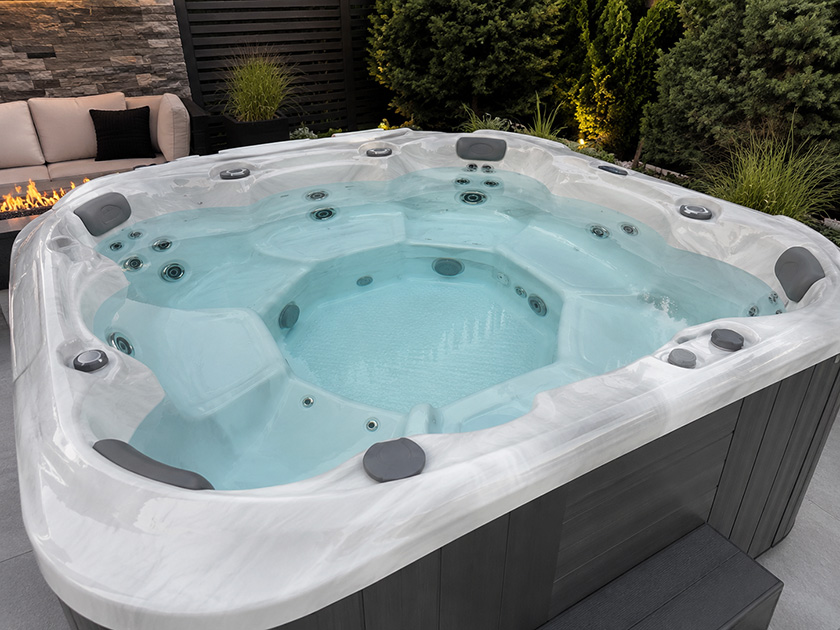
The footwell is the open area at the bottom of the hot tub where your feet and lower legs rest. It may not look like one of the most exciting specifications on a hot tub, but once several people are sitting in the spa together, its size and shape can make a noticeable difference. A hot tub can have plenty of seats and still feel crowded if everyone is competing for the same small amount of legroom.
What Is a Hot Tub Footwell?
The footwell is generally the lower central area of the spa surrounded by the seating. Depending on the design, it may be wide and open, narrower and deeper, shared by several seats, partially occupied by a lounger, equipped with therapy jets, or shaped with different levels and contours.
Because hot tub interiors are designed differently, two spas with very similar exterior dimensions can feel completely different once you sit inside them. One may devote more space to deeply sculpted seating, while another may create a larger open area in the center. The difference often comes down to how the available interior space is divided between seating and the footwell.
Why Footwell Size Matters
Manufacturers typically list how many people a hot tub is designed to seat, but seating capacity alone does not tell you how much personal space each person will actually have. A six-person spa may technically provide six designated seating positions, but that does not necessarily mean six adults will feel equally comfortable once everyone puts their feet into the center.
If the footwell is relatively small, people’s legs and feet may overlap or compete for the same space. A larger or more open footwell can give bathers more room to reposition their legs, change seating positions, and sit comfortably without constantly bumping into the person across from them.
That is why you should not judge hot tub capacity strictly by the number listed in the specifications. When possible, sit in the spa and pay attention to the space below the seats, not just the number or shape of the seats themselves.
Think About Who Will Actually Use the Hot Tub
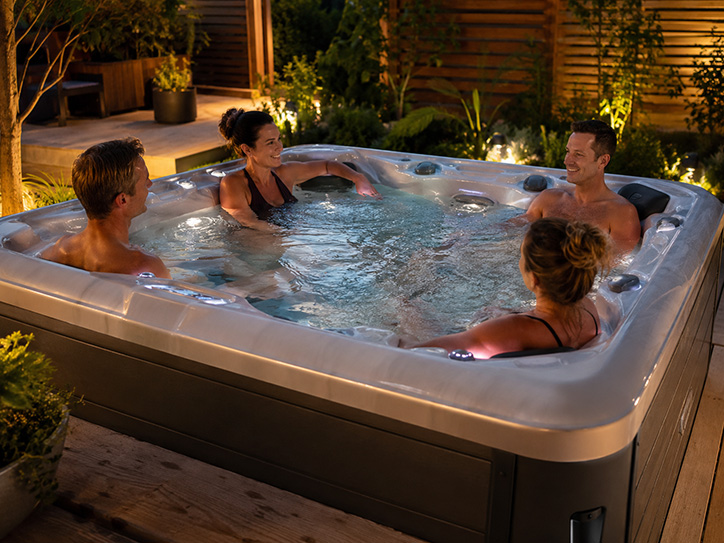
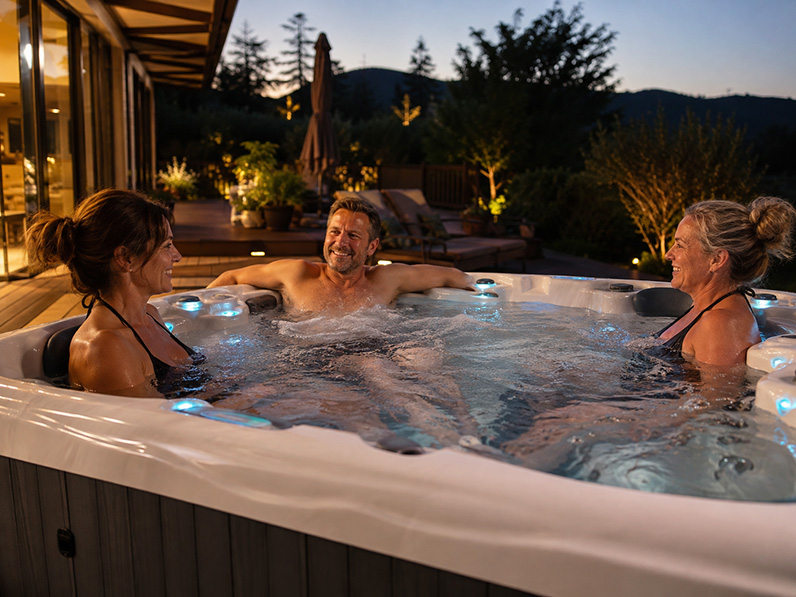
Footwell design becomes especially important when several people regularly use the spa together. A couple purchasing a six-person hot tub may have plenty of room most of the time because only two people are sharing the interior. A family of five or six adults using that same spa regularly may notice the shared footwell much more.
Think about how you realistically expect to use the hot tub. Will it mostly be one or two people, or do you plan to entertain regularly? Will children use the spa with adults? Are the people using it relatively tall? Do you like moving between seats to experience different jets? A spacious footwell can be notably valuable when several adults are using the spa at the same time because everyone needs somewhere comfortable to place their legs and feet.
Taller People May Notice the Difference More
Height matters when choosing hot tub seating because a taller person generally needs more room for their legs than someone who is shorter. A seat that looks spacious from above may feel very different once a tall adult sits down and extends their legs into the footwell.
Seat depth matters too. A deeper seat may provide excellent shoulder coverage, but it can also change where your feet naturally land in the spa and how much legroom you need. A shallower seat may position your body differently and make the same footwell feel larger or smaller depending on your height.
This is one reason trying different seating positions before buying is so useful. It gives you a better idea of whether your knees, legs, and feet naturally fit the interior rather than relying entirely on measurements.
What About Foot Jets?
Some hot tubs include jets positioned specifically for the feet. Footwell jets can add an additional layer to the hydrotherapy experience by directing water toward the soles of the feet or lower legs while you relax in another seat.
Love’s Hot Tubs carries Nordic models that incorporate footwell features along with their therapy jets. For example, the Nordic Retreat SE includes a footwell light and 28 adjustable Nordic Star™ jets as part of its overall design.
When looking at a spa with foot jets, pay attention to where your feet naturally rest when you are seated. A foot jet is most useful when your feet comfortably line up with it. If you have to twist, stretch, or sit awkwardly just to reach the jet, you may not use that feature as often as you expected.
Loungers Can Change the Footwell
A lounge seat allows you to recline with your legs extended, which many hot tub owners enjoy because it creates a very different hydrotherapy experience from an upright seat. However, a lounger also takes up interior space.
In some designs, the lounger extends into an area that might otherwise become part of the central footwell. That can leave less shared legroom for people sitting in the upright seats. The difference may not matter much if one or two people usually use the spa, but it may become more noticeable when several adults are seated together.
That does not make a lounger a poor choice. It simply creates a tradeoff. If you love reclining hydrotherapy and usually have one or two people in the spa, a lounger may be exactly what you want. If your priority is fitting several adults comfortably at the same time, a more open seating layout with a larger shared footwell may be more practical.
Open Seating Can Create More Shared Space
Open-seating spas generally place individual seats around the perimeter without a full-length lounger occupying one side. That arrangement can create a larger central area where everyone can place their feet and legs.
The additional shared space may also make it easier for people to move from one seat to another and experience different jet configurations throughout the spa. For households that like entertaining or expect several adults to use the hot tub together, that flexibility can be valuable.
Again, neither seating layout is universally better. The right choice depends on whether you value having a dedicated reclining position or prefer having more open shared space in the center of the spa.
Do Not Judge a Hot Tub by Exterior Size Alone
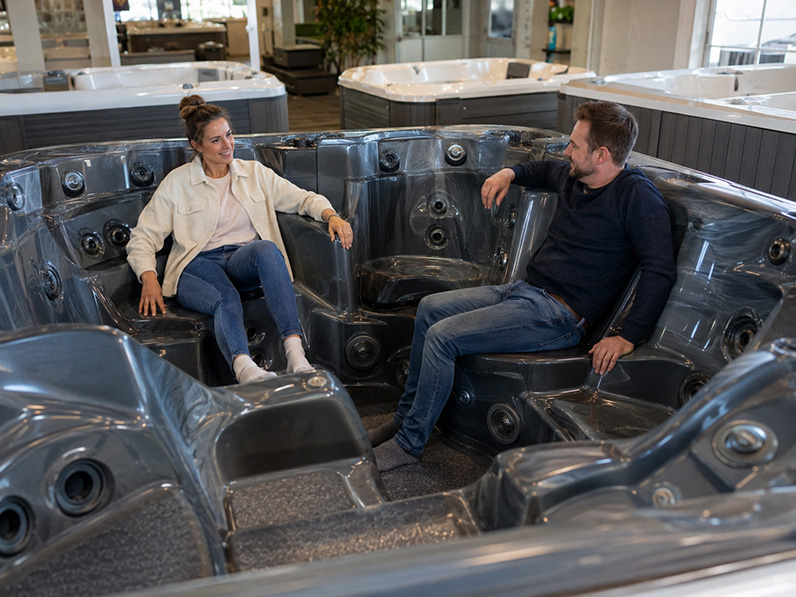
Exterior dimensions are useful when determining whether a hot tub will fit on your patio, concrete pad, or prepared foundation, but those measurements do not tell you how the interior space is arranged.
Two spas with nearly identical outside dimensions may have completely different seat depths, seating counts, lounger designs, footwell widths, shell contours, jet placements, and water capacities. One manufacturer may dedicate more room to deeply contoured seating, while another may create a more open interior.
That is why specifications should be the beginning of your comparison rather than the end. Look inside the spa and see where the available space actually goes. A few inches of difference in the way a shell is shaped can noticeably change how roomy the spa feels once people are sitting inside it.
Does a Larger Footwell Mean a Larger Hot Tub?
Not necessarily. Spa designers can create interior space in several different ways without dramatically increasing the overall dimensions of the hot tub.
A manufacturer may use less heavily sculpted seating, eliminate a lounger, change seat angles, adjust the depth of certain seats, or reshape the shell to provide more shared foot space. These design decisions can make a spa feel much more open even if the exterior footprint is similar to another model.
For example, Love’s carries Nordic spas in several different shapes and layouts, ranging from compact models to larger round and rectangular designs. The differences are not simply about how many seats are listed in the specifications. The interior configuration determines how that space actually feels once people are using it.
Why Sitting in the Hot Tub Matters
A specification sheet can tell you dimensions, water capacity, pump size, seating capacity, and jet count, but it cannot tell you exactly how your body will fit inside the spa.
If possible, sit in the hot tub before purchasing it. Even a dry test can help you evaluate seat depth, back support, knee position, the distance between seats, available footwell space, whether your legs overlap with someone sitting across from you, and how easily you can move from one seat to another.
A wet test can reveal even more because buoyancy changes how your body sits in the water. You may float slightly forward or upward compared with how you sit in an empty spa, which can affect how the seats, jets, and footwell feel.
The important thing is to evaluate the entire interior rather than simply counting the seats around the edge.
Questions to Ask About the Footwell
When comparing hot tubs, ask:
- How large is the shared footwell?
- How many adults can comfortably place their feet there?
- Does the lounger reduce central legroom?
- Are there foot jets?
- Where do my feet naturally rest?
- Will taller users have enough legroom?
- Are there different seat depths?
- Can people move easily between seats?
- Does the spa feel comfortable when several people are sitting in it?
These questions can reveal things you may never learn from a model name, brochure, or seating-capacity number alone. A spa that looks perfect on paper may feel very different once you actually sit inside it.
Comfort Is About More Than the Seats
The seats may be where you begin your hot tub search, but they are only one part of the overall experience. The space between those seats matters too.
A well-designed footwell can provide room to stretch your legs, share the spa comfortably with other people, change seating positions, and enjoy foot or lower-leg jets without feeling crowded. That extra space may not be the first feature you notice in a showroom, but it can become one of the things you appreciate most once you start using the spa regularly.
When you shop for a hot tub, look at the entire interior. Sit in the seats, stretch out your legs, notice where your feet naturally land, and think about who will usually be sitting across from you.
At Love’s Hot Tubs, you can compare different spa sizes and seating layouts to see which configuration feels right for the people who will actually be using it.
Because a hot tub may be listed for five, six, or seven people, but how those people fit inside it is what really matters.