

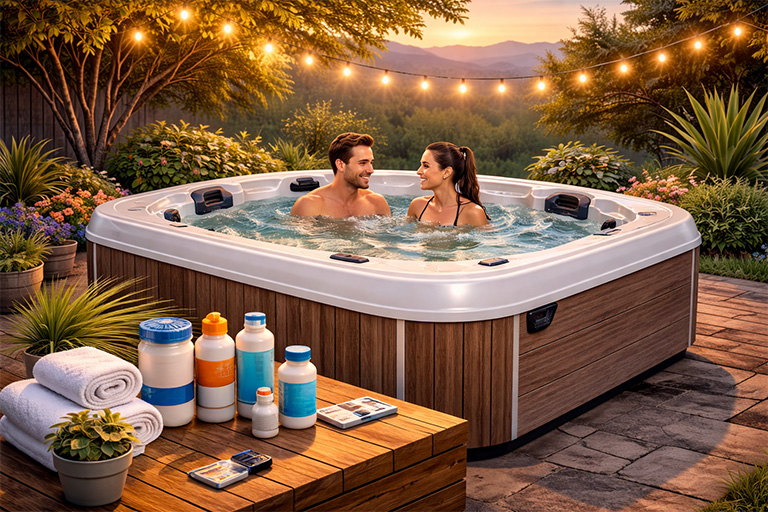
Owning a hot tub should feel like a daily mini-vacation—not a part-time chemistry lab. But most hot tub problems (cloudy water, itchy skin, funky smells, foaming, “why is this happening again?”) usually come down to a handful of very fixable mistakes.
This guide breaks down the most common hot tub mistakes we see, why they matter, and the easiest ways to avoid them—so your water stays clear, comfortable, and low-stress.
Mistake #1: “I’ll test later” (aka not testing often enough)
If you only test when the water looks off, you’re always reacting instead of preventing.
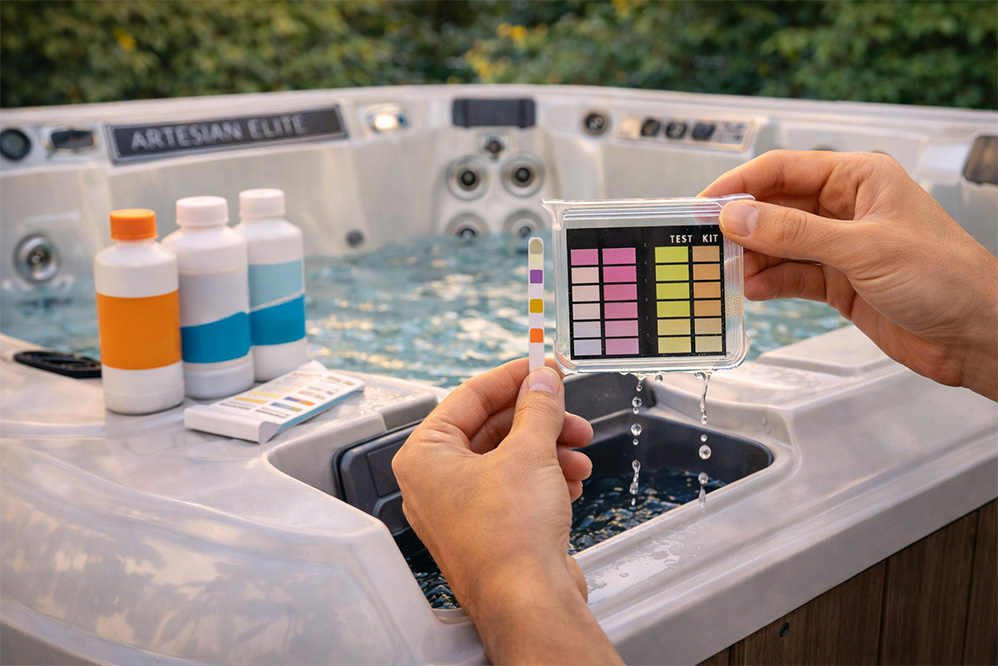
The CDC recommends regularly checking chlorine level and pH, and testing at least twice per day (more often with heavy use). They also note that test strips are less accurate than a DPD test kit. CDC
Easy fix
- Test chlorine/bromine + pH on a simple rhythm:
- Quick test before you soak
- Quick test the next day
- If you want more accurate results, upgrade from strips to a DPD test kit (strips are convenient, just not as precise). CDC
Mistake #2: Chasing sanitizer numbers while ignoring pH
A lot of people focus on chlorine/bromine and forget that pH controls how well the sanitizer works.
CDC guidance explains that as pH increases, chlorine becomes less effective at killing germs—especially above 8.0. CDC
Easy fix
- Keep pH in the 7.0–7.8 range. CDC+1
- If your pH is constantly bouncing, that’s usually a sign your water needs better “buffering” (often related to alkalinity management), or it may be time for a drain/refill (more on that below).
Mistake #3: Running sanitizer too low (or “it’s fine… right?”)
Hot tubs are warm, aerated, and smaller than pools, so sanitizer is used up quickly.
CDC’s recommended minimums for hot tubs:
- Chlorine: at least 3 ppm
- Bromine: 4–8 ppm
- pH: 7.0–7.8 CDC
And if you’re thinking “but the water looks clear,” remember: clear water doesn’t automatically mean safe water.
Easy fix
- Keep sanitizer in range consistently, not just right after you add chemicals.
- Test more frequently after:
- hosting friends
- long soaks
- heavy jet use (aeration can affect readings
Mistake #4: Using stabilized chlorine products (cyanuric acid) in a hot tub
This one surprises a lot of people.
The CDC specifically recommends not using cyanuric acid (or chlorine products that contain it—often labeled dichlor/trichlor) in hot tubs. CDC
Why it matters: stabilizer can change how chlorine behaves, and in a small hot tub environment, it can contribute to issues that feel like “my water is impossible to keep balanced.”
Easy fix
- Read labels and avoid products that list cyanuric acid (or stabilized chlorine) for hot tub use.
- If you’re not sure what your current setup is, bring your water results in and ask for help matching the right system for your tub and habits.
Mistake #5: Mixing chemicals (or adding water to chemicals)
A surprising number of hot tub accidents happen during “maintenance,” not during soaking.
The National Pesticide Information Center (NPIC) warns:
- Never mix pool/spa products with acids or other chemicals unless the label says to
- Add chemicals to water—never add water to chemicals.
- Use chemicals in a well-ventilated area and consider protective gear like gloves and goggles National Pesticide Information Center+1
Easy fix
- One chemical at a time, with circulation running
- Store chemicals sealed, dry, and away from kids/pets National Pesticide Information Center
- If you ever smell a sharp, “gas”- like odor while handling chemicals, step back and get some fresh air.
Mistake #6: Getting in “dirty” (lotions, makeup, sweat, and laundry detergent residue)
Hot tubs don’t just have “water” in them—after a few uses, they have a mix of sweat, body oils, lotions, and whatever else came along for the ride.
CDC recommends showering before getting in. CDC
NPIC also explains that chlorine can react with organic waste to form chloramines, which can off-gas and cause irritation—especially in poorly ventilated indoor environments. National Pesticide Information Center
NPIC also explains that chlorine can react with organic waste to form chloramines, which can off-gas and cause irritation—especially in poorly ventilated indoor environments. National Pesticide Information Center
Easy fix
- Quick rinse before soaking (even 30 seconds helps)
- Use a separate “hot tub towel” that isn’t loaded with fabric softener.
- Try to avoid heavy lotions right before you soak.
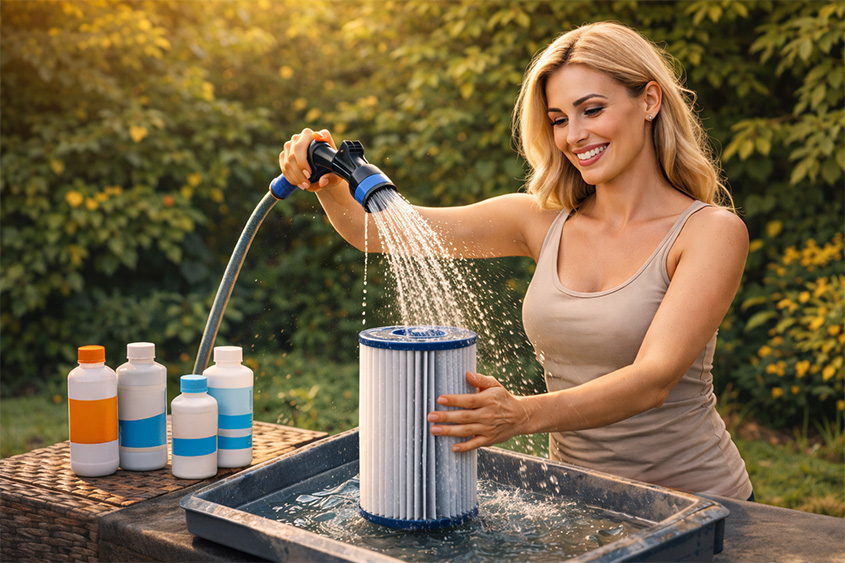
Mistake #7: Ignoring the filter until the water looks gross
Your filter is doing a ton of work. When it’s clogged, your sanitizer struggles, and your water goes downhill faster.
The CDC emphasizes keeping recirculation/filters operating and maintained as part of healthy hot tub operation. CDC
Easy fix
- Rinse filters regularly (your exact schedule depends on use, pets, and how many people soak)
- If the filter looks permanently dingy or won’t rinse clean anymore, it’s probably time to replace it.
Mistake #8: Never shocking (or shocking without a plan)
Even if your sanitizer is “fine,” buildup from use can create that cycle of:
cloudy water → extra chemicals → temporary improvement → cloudy again.
cloudy water → extra chemicals → temporary improvement → cloudy again.
A public health resource from the Indiana Department of Health discusses breakpoint chlorination/shocking and notes that chloramine science and best practices are evolving. Indiana Government
(You don’t have to be a chemist—this is just a reminder that shocking is part of a complete routine, not an emergency-only tool.)
(You don’t have to be a chemist—this is just a reminder that shocking is part of a complete routine, not an emergency-only tool.)
Easy fix
- Use shock as a maintenance step, especially after:
- a party/lots of bathers
- heavy jet use
- water that smells “off.”
Mistake #9: Keeping the same water too long
At some point, “fixing” old water becomes harder than replacing it.
A practical guideline from the Indiana Department of Health provides a simple drain/refill estimate:
Spa gallons ÷ 3 ÷ users per day = replacement interval (days). Indiana Government
Spa gallons ÷ 3 ÷ users per day = replacement interval (days). Indiana Government
Example:
If your tub is 360 gallons and you average 2 users/day:
360 ÷ 3 ÷ 2 = 60 days (about 2 months)
If your tub is 360 gallons and you average 2 users/day:
360 ÷ 3 ÷ 2 = 60 days (about 2 months)
Easy fix
- Put a drain/refill on your calendar as normal ownership (not a failure)
- When you drain, it’s also a great time to:
- Wipe the shell.
- Rinse the cabinet area if needed.
- Start fresh with clean filters.
Mistake #10: Thinking a strong “chemical smell” means the water is clean
It’s the opposite.
The CDC notes that a properly chlorinated hot tub has little odor, while a strong chemical smell indicates a problem. CDC
That smell is often linked to chloramines and other byproducts—basically a sign that the water needs attention, not reassurance.
Easy fix
- Don’t mask it with fragrance products.
- Test water (sanitizer + pH first).
- Improve ventilation if you’re indoors (especially important for indoor spas).
Mistake #11: Running the hot tub too hot (and ignoring common-sense safety)
The CDC recommends that hot tubs not exceed 104°F (40°C). CDC
They also advise:
- No alcohol before/during use
- Children under 5 should not use hot tubs.
- If pregnant, talk to a healthcare provider before using a hot tub CDC
Easy fix
- Keep temperature in a safe zone (many people love 100–102°F for longer soaks)
- Set house rules for guests (especially if you host often)
Mistake #12: Overlooking drain/cover safety
Hot tubs are relaxing, but they’re still powerful pieces of equipment.
The U.S. Consumer Product Safety Commission (CPSC) addresses entrapment hazards and cites standards and regulations on suction fittings and drain safety. U.S. Consumer Product Safety Commission
CDC hot tub guidance for operators also highlights preventing entrapment injuries and maintaining a locked safety cover when possible. CDC
CDC hot tub guidance for operators also highlights preventing entrapment injuries and maintaining a locked safety cover when possible. CDC
Easy fix
- Make sure drain covers are intact and not broken/cracked.
- Keep the locking cover secured when not in use.
- If you ever notice a missing or damaged drain cover, treat it as urgent.
A simple routine that prevents most problems
60-second “before you soak” check
- Is the water clear?
- Is the cover area clean (no funky smell)?
- Quick test: sanitizer + pH
Weekly basics
- Rinse filter
- Test more often if you’ve had guests.
- Wipe the waterline if you notice buildup.
Every drain/refill
- Fresh start on balance
- Deep clean your filters (or replace if needed)
When to get expert help
If your water keeps going sideways even when you’re testing and adjusting, it usually means one of these is happening:
- You’re fighting old water (time to drain/refill).
- Your testing method is giving inaccurate readings.
- Your sanitizer system isn’t matched to your usage.
If you want it simple: bring your current readings in and let someone help you build a routine that fits your lifestyle.
Love’s Hot Tubs
If you want your hot tub to stay clear, comfortable, and easy to maintain, stop by Love’s Hot Tubs for water-care essentials (test kits/strips, filters, cover care, and the right chemicals for your setup). A few small tweaks now can save you weeks of frustration later.
References
- Centers for Disease Control and Prevention (CDC). Home Pool and Hot Tub Water Treatment and Testing. CDC
- CDC. What You Can Do to Stay Healthy in Hot Tubs. CDC
- CDC. Operating and Managing Public Pools, Hot Tubs, and Splash Pads (Toolkit). CDC
- Indiana Department of Health. How to Shock the Pool (Chlorinate to Breakpoint). Indiana Government
- National Pesticide Information Center (Oregon State University). Pool and Spa Chemicals Fact Sheet. National Pesticide Information Center+1
- U.S. Consumer Product Safety Commission (CPSC). Swimming Pools/Spas Drain Entrapment. U.S. Consumer Product Safety Commission
- U.S. Environmental Protection Agency (EPA). Improving Indoor Air Quality. US EPA+1