
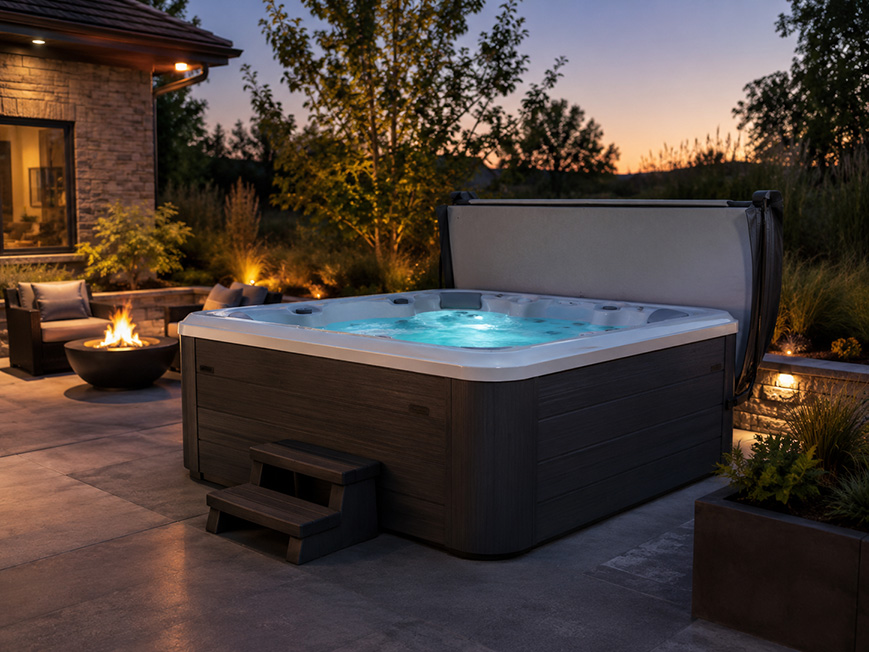
When you shop for a hot tub, most of the features competing for your attention are easy to see. Comfortable seats, colorful lighting, waterfalls, jets, controls, and different shell finishes are usually the first things shoppers notice, and they are also some of the most enjoyable parts of comparing different spas. However, some of the most important parts of a hot tub are hidden underneath the shell.
Behind the cabinet are the frame, insulation, plumbing, pumps, heater, control system, electrical components, and the base supporting the spa. These hidden components can affect everything from energy efficiency and noise to serviceability and long-term durability. So before buying a hot tub, do not only ask what is inside the shell. Take some time to understand what is underneath it, too.
Start at the Bottom: What Is the Hot Tub Sitting On?
The bottom of a hot tub helps separate the spa’s internal structure and components from the surface beneath it, and manufacturers use different base designs and materials to accomplish that. For example, Artesian Spas describes its construction as beginning with a full ABS base, with the frame built above it. That base becomes an important part of the spa’s overall construction because it helps form the foundation for everything above it.
A hot tub may remain outdoors year-round, so the underside can be exposed to moisture, dirt, insects, changing temperatures, and other environmental conditions depending on where it is installed. When comparing models, ask what material is used underneath the spa and how the base is designed to help protect the structure and components above it over time.
What Supports the Shell?
A filled hot tub carries a tremendous amount of weight. Along with the shell and equipment, the spa may hold hundreds of gallons of water and several people, which makes the supporting structure underneath the shell an important part of overall hot tub construction. Different manufacturers use different framing materials and construction methods. Artesian Spas, one of the brands available through Love’s Hot Tubs, states that its spas use pressure-treated lumber framing constructed on top of the ABS base as part of its approach to structural durability.
You do not need to become an expert on framing materials before buying a spa, but you should be able to ask, “What is supporting this hot tub underneath the shell?” A knowledgeable dealer should be able to explain how the spa is built, what materials are used, and how the structure supports the weight of the hot tub—not just point out the features above the waterline.
Look at the Insulation
Insulation is another major component hidden behind the cabinet. A hot tub constantly works to maintain water that is much warmer than the surrounding air, which becomes especially important during an Idaho winter. A well-designed insulation system helps slow heat transfer and can affect how efficiently the spa maintains its temperature. Artesian says the space between its cabinet and structure is filled with insulating foam, and according to the manufacturer, its full-foam design can also help reinforce the structure, reduce noise, and support plumbing by limiting vibration.
That additional support is easy to overlook because insulation is not always there solely to keep the water warm. Depending on the design, it may also help reduce movement around plumbing lines and other components inside the cabinet.
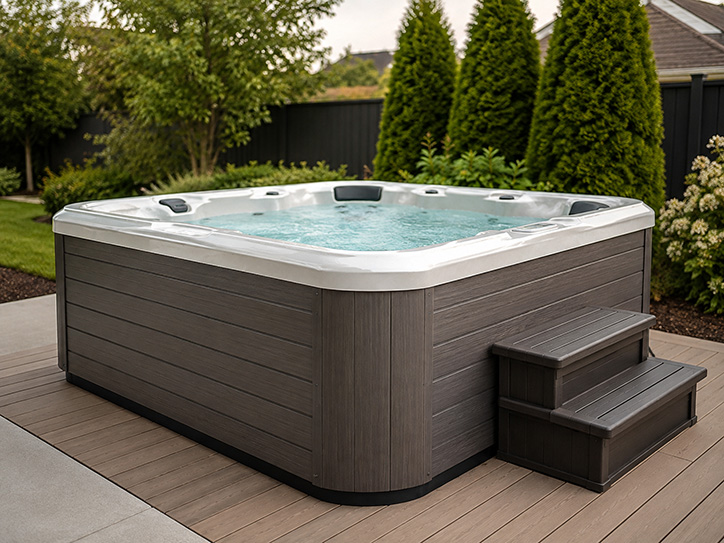
When comparing spas, ask what type of insulation is used, where it is located, and how technicians access equipment and plumbing when service is needed. Love’s recommends looking at the overall insulation strategy—cabinet, shell, and plumbing—rather than relying on vague claims that a spa is simply “well insulated.”
Look at the Plumbing
A hot tub may have dozens of jets, which means there can be a substantial network of plumbing hidden behind the shell. Those plumbing lines move water between the pumps, heater, filtration system, and individual jets throughout the spa. When looking inside an equipment area, notice whether the plumbing appears organized and whether major components are accessible. You do not need to judge the quality of every pipe or fitting yourself, but you can ask how the plumbing is supported, how easily a leak could be located, and how the manufacturer reduces vibration around plumbing connections.
It is also worth asking whether common components can be reached without requiring large portions of the spa to be taken apart. Artesian specifically notes that its full-foam construction can help protect plumbing from unnecessary vibration, which shows how the frame, insulation, and plumbing work together as part of the spa’s overall construction rather than functioning as completely separate systems.
Where Are the Pumps?
The pumps are responsible for moving water through the hot tub. Depending on the spa, you might find one primary pump, multiple jet pumps, a dedicated circulation pump, or some combination of those systems. Pump count is certainly something to compare, but there is another important consideration underneath the spa: Can the pumps actually be reached when they need service?
Pumps are mechanical components, and even a well-built pump may eventually require inspection, new seals, repair, or replacement. A well-organized equipment compartment is only useful if a technician can conveniently reach the components inside it. When inspecting a spa, look at where the pump or pumps are positioned, ask how the equipment panel is removed, and find out how easily those components can be accessed when service is needed.
Find the Heater and Control System
Hot tubs also contain equipment responsible for heating the water and controlling functions throughout the spa. These components need to be protected from the surrounding environment while still remaining accessible for diagnosis, maintenance, and eventual service. You do not need to understand every wire or connection inside the equipment bay, but it is helpful to know where the major components are located and what role they play.
Ask the dealer to show you the pump or pumps, heater, control pack, filtration plumbing, electrical connections, and drain. Seeing those components can give you a better understanding of what you are buying beyond the seating, jets, lighting, and other features that are immediately visible when you first look at a hot tub.
Service Access Matters More Than You Might Think
A hot tub may operate for years without a major repair, but routine inspection and eventual service are still part of owning mechanical equipment. The easier important components are to reach, the easier it may be for a technician to inspect, diagnose, or service the spa when needed. The Pool & Hot Tub Alliance includes equipment maintenance among the core elements of professional hot tub service and maintenance, so when comparing models, ask which cabinet panels provide access to the equipment and plumbing and how much of the spa can be reached without major disassembly.
The installation itself also matters. A spa surrounded by permanent decking, walls, or landscaping without adequate access may become much more difficult to service later. If you are planning a custom surround for your hot tub, talk with your dealer before construction so important service panels, plumbing, and equipment areas do not become permanently blocked.
Pay Attention to the Cabinet
The cabinet is the exterior material you see around the sides of the spa, but it also creates a boundary between the outside environment and many of the components underneath. Appearance matters, but the cabinet’s durability and accessibility are equally important. Look at how the cabinet panels attach, whether they can be removed for service, and how the material is designed to handle outdoor exposure over time.
You may also want to ask whether the cabinet requires routine maintenance and whether replacement panels are available if one becomes damaged. Artesian describes its exterior cabinets as maintenance-free and places its insulation between the cabinet and internal structure. A cabinet should complement the appearance of your backyard, but accessibility and durability deserve just as much attention as color and design.
The Foundation Under the Hot Tub Matters Just as Much
The spa itself is only part of the structural equation. The surface underneath the hot tub must also be capable of supporting the substantial weight of the filled spa, its water, equipment, and occupants. Artesian’s installation documentation warns that inadequate structural support can result in spa damage and serious safety risks, and for installations on decks or other elevated surfaces, the manufacturer recommends having the structure evaluated by an appropriate qualified professional.
Before delivery, make sure the installation site meets the requirements for the specific spa you are purchasing. Even a well-built hot tub can develop problems if it is placed on an inadequate foundation, so proper site preparation is an important part of protecting the spa from the beginning.
Moisture Around the Spa Matters
Because a hot tub contains hundreds of gallons of water, moisture is naturally part of its environment. However, the cabinet and internal structure should not be constantly exposed to uncontrolled water from other sources around the property. Artesian’s owner documentation advises locating the spa away from conditions that repeatedly expose the cabinet and frame to external water, including certain sprinklers, drains, and gutters.
That makes proper site planning an important part of protecting the spa over time. Before choosing your installation location, think about where rainwater drains, sprinklers spray, snow melts, roof runoff lands, and water travels when the hot tub is drained. Protecting the components underneath the spa begins with choosing a location that helps keep unnecessary external water away from the unit.
Do Not Buy a Hot Tub Based Only on What You Can See
The seats and jets are important because those are the features you will experience every time you use the spa. However, underneath those visible features is the system responsible for making everything work. Before making your decision, ask about the base, frame, insulation, plumbing, pumps, heater, control system, cabinet, drain, and equipment access.
Understanding how those pieces work together can give you a much better picture of the overall quality and serviceability of the hot tub you are considering. A quality hot tub should not only look good and feel comfortable—it should also make sense from the bottom up.
Questions to Ask Before You Buy
When comparing hot tubs, consider asking:
- What is underneath the bottom of the spa?
- What material is the frame made from?
- How is the shell supported?
- What type of insulation is used?
- Where is the insulation located?
- How is the plumbing supported?
- How many pumps does the spa use?
- Can pumps and major components be easily reached?
- Which cabinet panels are removable?
- How would a technician access the plumbing if there were a leak?
- Where is the drain?
- What foundation does this model require?
- How much clearance should I leave around the spa for service?
These questions may not be as exciting as choosing shell colors, seating configurations, or jets, but the answers can tell you a great deal about the spa you are considering and what ownership may look like years down the road.
Look Beyond the Surface
A hot tub is something you may plan to own and enjoy for many years, which makes construction worth investigating before you buy. At Love’s Hot Tubs, shoppers can compare different models from Artesian Spas and Nordic Hot Tubs and learn how the components beneath the shell differ between spa lines.
Enjoy the seats, try the jets, look at the lighting, and compare the features you will use every day. But before making your final decision, take some time to look beneath the surface and understand what makes all of those features possible. Some of the most important parts of a hot tub are the ones you normally never see.